Posts tagged ‘prices’

Update on the Health Care Trojan Horse

I have argued on numerous occasions that government-funded health care is a Trojan Horse for detailed regulation of how we treat our bodiesThe Economist Blog has a great post on this topic:

Why exactly is obesity a public health issue? Well, when,
by force of law, you externalise responsibility for providing a good,
such as health care, then the effects of all individual choices that
affect the cost of providing that good for the individual are thereby
transformed from internal to external effects. If you, like
Mr Dubois, are in the grip of the blithe assumption that reducing
negative externalities by raising the cost of the behaviour that causes
them is simply what government does, then obviously my gluttony and sloth are public problems. Because public policy made them public problems! So, obviously,
it's up to the government to fiddle with prices to manipulate our
behavior in order to minimise its impact on the tax-financed national
budget.

This sort of thing drives me crazy because it's just so
thoughtlessly arbitrary -- intellectual empty calories. Why
specifically a tax on junk food? Yes, one
of the causes of obesity is "the consumption of too many calories."
Another is the failure to burn the calories one consumes. So why not
levy huge fines on people for not showing up at "voluntary"
government-funded yogalates classes? Or if people are consuming too
many calories, then just put a tax on calories. Why tax some calories
but not others? You can get fat eating steak, too. Maybe a national
"cap and trade" system of calorie credits would do the trick. Hey, do
you know who's healthy? Mormons are. Maybe the government should
provide giant tax credits for being Mormon. Or perhaps it would be
easier if the national health care system could just deny services for
ailments it judged to be obesity-related.  You could even decide not to
have a national health care system at all and allow insurance premiums to reflect the actuarial risk of individual behavior! But that would be crazy. 

Hat tip to TJIC, who has more.  I think this would be a great anti-universal-coverage T-shirt:

Tskyl2

Ironically, this shirt is produced by the National Organization of Women, who are strong government health care supporters.  Go figure.

Supply and Demand, But Not In Water

Thanks to a reader comes this article from the NY Times that yet again discusses a water shortage and possible government action without once mentioning the word "price."  If water prices floated like gas prices, we wouldn't have to discuss things like these:

Within two weeks, Carol Couch, director of the Georgia Environmental
Protection Division, is expected to send Gov. Sonny Perdue
recommendations on tightening water restrictions, which may include
mandatory cutbacks on commercial and industrial users.

If that
happens, experts at the National Drought Mitigation Center said, it
would be the first time a major metropolitan area in the United States
had been forced to take such drastic action to save its water supply.

But of course politicians love being responsible for resource allocation through command-and-control government, because it creates winners and losers and both will then donate to the next election cycle.  Atlanta already has fairly expensive water, but a quick 50% rate hike about 3 months ago would have likely obviated this shortage while also providing the municipality with additional funds to develop new sources.

I wrote a lot more about water scarcity and the price mechanism, including the observation that Phoenix ridiculously has some of the lowest water prices in the country, here.

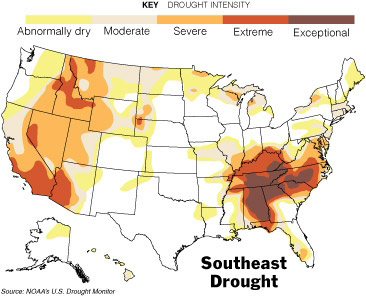
postscript: One of the media tricks to make things look worse and panicky is to present asymmetric charts.  For example, the NY Times presents this drought map:
2007droughtgraphic

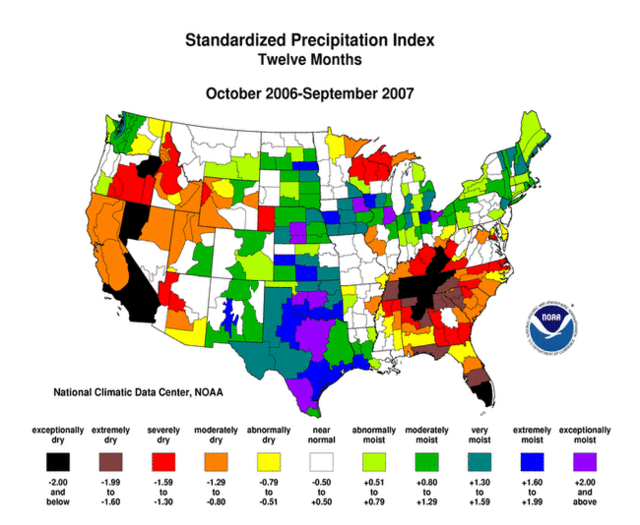
All you see is what one presumes to be normal in white and then a lot of drought.  But in fact, this chart is truncated.  It omits all the data for areas that are wetter than usual.  Here is the chart for September form the NOAA with both over and under precipitation over the past 12 months:

Spi12_200709_pg

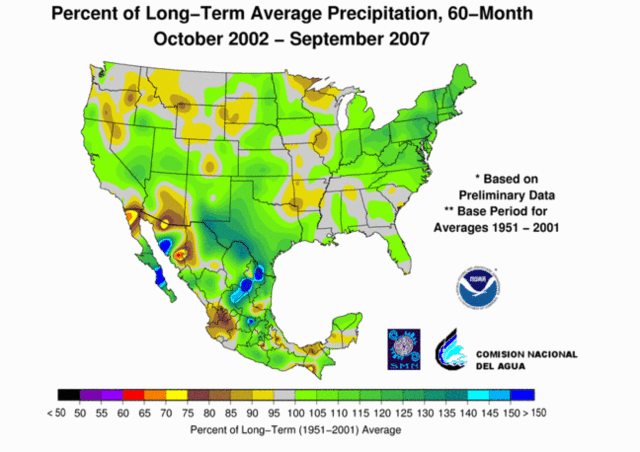
Whoa, that shows a different picture, huh?  Basically, about as much stuff is wetter than normal as drier than normal.  Which is exactly what one might expect in any period.  And by the way, if you look at the last five years, the US is pretty freaking wet:

Usnmx20070960monpctpcppg

Cost of "the Right to Build"

Virginia Postrel has a really interesting article in the Atlantic.com.  Often, home construction costs are disaggregated into the cost of land and the cost of the home.  She adds a third piece -- "the right to build" related to regulation and land use restrictions.  She cites a study that most of the cost of new homes in expensive markets like California are not building costs or even land acquisition costs, but the enormous costs involved in getting the government to let you build the house you want on your own land.

In a 2003 article, Glaeser and Gyourko calculated the two different
land values for 26 cities (using data from 1999). They found wide
disparities. In Los Angeles, an extra quarter acre cost about
$28,000"”the pure price of land. But the cost of empty land isn't the
whole story, or even most of it. A quarter- acre lot minus the cost of
the house came out to about $331,000"”nearly 12 times as much as the
extra quarter acre. The difference between the first and second prices,
around $303,000, was what L.A. home buyers paid for local land-use
controls in bureaucratic delays, density restrictions, fees, political
contributions. That's the cost of the right to build.

And that right costs much less in Dallas. There, adding an extra
quarter acre ran about $2,300"”raw land really is much cheaper"”and a
quarter acre minus the cost of construction was about $59,000. The
right to build was nearly a quarter million dollars less than in L.A.
Hence the huge difference in housing prices. Land is indeed more
expensive in superstar cities. But getting permission to build is way,
way more expensive. These cities, says Gyourko, "just control the heck
out of land use."

These differences cascade into a number of areas:

Dallas and Los Angeles represent two distinct models for successful
American cities, which both reflect and reinforce different cultural
and political attitudes. One model fosters a family-oriented,
middle-class lifestyle"”the proverbial home-centered "balanced life."
The other rewards highly productive, work-driven people with a yen for
stimulating public activities, for arts venues, world-class
universities, luxury shopping, restaurants that aren't kid-friendly.
One makes room for a wide range of incomes, offering most working
people a comfortable life. The other, over time, becomes an enclave for
the rich. Since day-to-day experience shapes people's sense of what is
typical and normal, these differences in turn lead to contrasting
perceptions of economic and social reality. It's easy to believe the
middle class is vanishing when you live in Los Angeles, much harder in
Dallas. These differences also reinforce different norms and
values"”different ideas of what it means to live a good life. Real
estate may be as important as religion in explaining the infamous gap
between red and blue states.

The Dallas model, prominent in the South and Southwest, sees a
growing population as a sign of urban health. Cities liberally permit
housing construction to accommodate new residents. The Los Angeles
model, common on the West Coast and in the Northeast Corridor,
discourages growth by limiting new housing. Instead of inviting
newcomers, this approach rewards longtime residents with big capital
gains and the political clout to block projects they don't like.

What Happened to Coyote Blog (Network Solutions Sucks Edition)

Years ago, I, without really knowing what I was doing, established a bunch of my URLs through Network Solutions.  I didn't understand at the time that Network Solutions was both irritating and the high-cost provider. 

Now that I know more, I have doing my registrations via a much lower cost supplier (GoDaddy).  A few weeks ago, I did a mass transfer from Network Solutions.  Apparently, Network Solutions locks the domains down, ostensibly for security (which is probably true) but also to make it harder to leave them, which makes sense as given their prices there must be a serious net drain of business out of the company.  Most of my domains cleared this Berlin Wall to freedom, but I screwed up on a couple, one of which was CoyoteBlog.com.  As a result, the domain ended up expired, and email dead.

Thanks for all of you who have tried to notify me of the problems.  Nearly two days ago I went ahead and renewed at Network Solutions for another year, just to get things back up ASAP.  Unfortunately, the URL still seems to be marked expired.  I don't know if that is their poor service or because I am in Hawaii and at the absolute end of the earth for name server updates.  Hopefully all will be right tomorrow.  For those who visited CoyoteBlog this weekend, I am sorry about the flurry of tacky popups Network Solutions was dealing out at the URL (as many as three at a time, the losers).  For those of you who access via https://coyoteblog.com/coyote_blog/ you should have been able to read the blog but without formatting.  I believe that RSS access was unaffected.

How Princeton Uses Its Money

Everybody is always trying to spend someone else's money.  This kind of thing would really make me sick, except it is a little funny to see the kind of class warfare and redistributionist economics preached by elite universities come back to bite them:

Dr. Gravelle points out that endowment wealth is concentrated in the
upper ranks, much of it at 62 institutions with endowments larger than
$1 billion. But just three years ago only 39 schools had billion-plus
endowments. That's a 38% increase in just a few years. In 2006, 125
schools had endowments over $500 million"”a third more than in 2002. The
number of schools that can count themselves as endowment-rich or
super-rich is growing rapidly....

What the data shows is that endowment wealth is everywhere"”except in
the hands of the students who need it today. Last year endowments
increased 17.7% on average"”those larger than a billion increased 18.4%.
Yet, despite double-digit increases stretching back a decade or more
"”endowment spending is at a nearly all-time low of 4.2%--down from 5.1%
in 1994, 6.5% in 1982, and 5.2% in 1975....

Tuition has been going up so rapidly for so long it has reached nearly
ungraspable levels. So let me put today's tuition cost in concrete
terms. Senators, what would your constituents say if gasoline cost
$9.15 a gallon? Or if the price of milk was over $15? That is how much
those items would cost if their price had gone up at the same rate that
tuition has since 1980.

I believe that skyrocketing tuition is
undoubtedly the biggest "access" problem in higher education. What can
possibly be more discouraging to a capable student whose parents are
not wealthy than a school with a $45,000 price tag on the door?...

Congress should not hesitate to consider a minimum payout
requirement"”and 5% should be considered a starting point. The 5% number
is a dated one"”even for private foundations. Many schools have been
rolling over so much money for so long that they should easily be able
to accommodate a higher rate of payout. Possibly the most significant
challenge for policymakers will be to make sure that any newly directed
monies actually go toward aid or tuition reduction and don't become
part of a shell game.

Seriously, is there no pocket of private money that socialists won't stick their hand into?  In effect, at the same time Americans get lambasted for saving too little, this guy is going after private universities for saving too much?  And note the implicit assumption about government intervention he holds and expects all of Congress to hold in the third paragraph above:  It is just assumed that if prices go up enough to upset the constituents, then it is Congress's job to act.

Far be it for facts to get in the way of good populism, but I do know what Princeton does with its 2nd or 3rd largest endowment:

  • Every student who gets admitted gets a financial aid package from the University that will allow them to attend, no matter what their finances are.  Yes, the student may have to work his butt off, but if he really wants to go to Princeton he will be able to go.  Princeton's wealth also allows it to be much more friendly in these financial assessments.  For example, many assets like the parent's house are taken off the table when assessing ability to pay
  • If a student graduates normally, then all of her debts are paid off at graduation.  Every student graduates debt-free, giving them far more flexibility in what jobs they choose our of college.  No longer must they eschew non-profit or low-paying jobs due to the burden of debt.
  • Princeton has accepted that applying more money to increasing the educational intensity of its existing 4000 students by an additional 0.1% is not the best use of its investment.  It has committed (in too small of a way for my preferences, but that is another matter) to using its fortunes to increase its size and bring Ivy League education to more people.  This year, it increased its entry class size by 250, which may seem small to those of you from large universities but is about a 20% increase for Princeton.

Since all Princeton students get whatever aid they need and graduate debt-free.  So the tuition number is irrelevent.  And statements like "I believe that skyrocketing tuition is
undoubtedly the biggest "access" problem in higher education" are virtually meaningless. 

I am Tired of Paying For People's Winter Vacations

I hire retired couples for the summer to run campgrounds and other recreation facilities.  Since these campgrounds are closed in the winter (most are under 8 feet of snow) I lay most of these folks off in October. 

The vast majority of my employees do not work the winter.  They have other retirement savings that they supplement working for me in the summer and then they take the winter off.   And that would be all of the story, except in  California.  For some reason in California, but not in most other states, all these folks run straight to the unemployment office and file for unemployment over the winter.  For those of you who don't know how unemployment insurance premiums work, the premium I pay as a percentage of wages is based on past claims experience.  In California, I am an "F", the worst category, and have to pay over 6%(!) of wages to unemployment insurance. 

Now in most states, what these employees are doing is illegal.   It is typical of unemployment offices that you have to call in each week and certify that you are looking for work.  If you are not actively looking for work, then you are not eligible, and most states outside CA seem fairly diligent about enforcing the rules.  Last year, not one but two of the people who were claiming unemployment in CA over the winter were in Mexico on the beach the whole time!  I know, because they called me from there to see if they were going to be rehired in the spring.

It was then that I found out why this happens more in CA than in other states.  I called the California state unemployment office and asked them how I could have cases of unemployment fraud (ie claiming unemployment when one is not actually looking for work) investigated.  The person from the state office got very hostile with me.  She said that I was making a very serious charge, and that if I made such a charge, and fraud was not proven, then I could be liable for civil and even criminal penalties for asking for the investigation.  I said forget it, raised prices to customers to cover the extra winter vacation wages I was forced to pay, and moved on.   

Commuter Rail: 1. Dig Hole. 2. Pour In Money 3. Repeat

The AZ Republic, long-time cheerleader for our current light rail project, writes another ode to commuter rail.  Today's love note is on the Albuquerque commuter rails system.

Sharon Hedrich heads out a little before 7 each morning for the 20-mile
trip to the law office where she works in downtown Albuquerque. She
used to leave home earlier for the dreaded crawl down the city's
congested freeway.

Driving to work could take 40 minutes or
more, depending on the number of emergencies stalling traffic. Now, she
boards a commuter train, settles into a plush red seat and spends the
half-hour ride reading a novel.

She says the train saves her aggravation - and money.

"I put 7 miles a day on my car instead of 50," Hedrich said recently as
the train zipped toward Albuquerque, New Mexico's largest city. "It's
50 bucks a month for me to ride this. I couldn't even get two tanks of
gas for that."

I am just all aglow for Sharon.  But does the project make sense for the taxpayers of the city and the state (and probably nation) that funded it?  Well, we don't know.  Because the AZ Republic writes 56 paragraphs lauding the system without once telling us anything about the system performance.  Does it cover its costs?  Are city roads visibly less congested?  Is there a net energy savings?  Is there measurably less pollution?  We don't know.  All we know is that three people, Geronimo Trujillo, Briana Duran, and Sharon, like it. 

Well, let's see if we can do the analysis that the Republic couldn't manage.  We are told it has 3000 presumably round-trip riders a day, and the fare for these riders is $50 per month.  That's $150,000 of revenue a month or $1.8 million a year.  How much does it take to operate?  Well, we are not told by the Republic and the Albuquerque authority ties itself in pretzels avoiding the question in this FAQ (question 1) comparing apples to oranges and lemons and bananas and any other fruit that might divert our attention.  But I can absolutely guarantee that it costs a hell of a lot more than $1.8 million.  I am not sure that covers the fuel bill, but it certainly does not cover wages, fuel, maintenance and whatever the state is paying the private owner of the rails for trackage rights. 

Let's see if we can find an analog that does disclose its costs to the public.  The commuter rail system in Northern Virginia called the VRE is about twice as long and carries about twice the passengers as the Albuquerque system.  Its costs are $55.4 million per year, so we can conservatively assume that the Albuquerque system is costing perhaps $20 million a year, a figure that exceeds its revenues by a factor of 11x.  That equates to a taxpayer subsidy of $6,000 per rider per year, which is not atypical for these systems.

And this ignores the capital cost.  Unbelievably, the article does actually mention the capital cost in the 36th paragraph, which is $135 million.  That is $45,000 per rider, or enough to buy two Prius's for each rider.

So Sharon Hedrich is happy?  Of course she is freaking happy.  The taxpayers paid $45,000 up front costs and $6,000 per year so she can save 43 miles of driving a day.  Assuming she has a 20 mpg car, pays $3 a gallon for gas, and rides the train to work 250 days a year, taxpayers are paying $6,000 a year to save Sharon $1,612.50 a year in gas.  If we want to consider gas plus wear and tear on her car at 45 cents per mile, taxpayers are paying $6,000 a year to save Sharon $4,837.50 per year.   The taxpayers would have been better off -- by a LOT -- buying her a Prius and paying her expenses to drive than buying and operating a train for her.  This is consistent with my past number crunching on other urban rail systems here and here.

Does the Republic mention these problems?  Sort of:

The system endured the typical raps against a big public-works project:
It fell behind schedule, an anti-tax foundation called it a bad idea
and there were some startup problems.

Dang those tax foundation guys - always getting in the way of progress!  Thank god such a great idea as subsidizing Sharon "endured" these Luddites.

By the way, I am a long-time train watcher and model railroader.  I love trains.  And, all things being equal and if everything was free in the world, I would love to have more commuter rail trains. Unfortunately, all things are not free.  And in most cases, particularly low-density cities outside the northeast, rail tends to be the most expensive possible option.  As a libertarian, I would rather the government just not appropriate this money in the first place.  But given that they are insisting on spending $135 million plus $20 million a year on transportation, nearly any other conceiveable project would have gotten more bang for the buck.

Update:  Below is a picture of Brianna Duran riding in an empty rail car.  It's good Albuquerque is keeping all those empty seats off the highway.

0930rail

Update 2: Here is the predictable response to the empty seat snark:  Well, it's the people's fault for not choosing such an obviously superior mode of transport.  Wrong.  Its the government's fault for not taking people's preferences into account when spending all that taxpayer money.  A government that adjusts itself to the citizens is a Democracy.  A government that demands citizens adjust themselves to the government is fascism.

Update #3:  I am getting email about the government subsidy of highways.  In theory, this is not supposed to be a subsidy.  The large gasoline prices we pay at the pump are supposed to be for highway funds.  This is actually a pretty intelligent way to pay for roads, because it does a decent job at matching use to fees, with a bit of a penalty thrown in for low mpg cars.  To the extent that gas taxes do not match road costs, I am all for eliminating any subsidy and making them match with the right gas tax.  But I know whatever subsidy there is is not as high as for this rail.  Using the numbers for this example, applied to 100 million US commuters, would imply a capital cost of $4.5 trillion and a yearly operating subsidy of $600 billion.  And this would only cover commuting.  Remember, the people in the story can't give up their cars - rail lines only run a few places.  These costs would be to allow commuters to give up their cars part of the time -- about the same number of roads and cars would still be necessary.

No Delegates for Iowa

When the left lambasts a government intervention into the economy and energy policy, you know the program has to be bad.  From Kevin Drum:

Terrific. Let's see: (a) environmentally speaking, corn ethanol is a
pretty dodgy idea, (b) we're subsidizing it anyway to the tune of $3
billion per year, (c) farmers, as you'd expect, are responding to the
subsidies by reducing the amount of farmland used for food production,
(d) this is driving up the price of staple food worldwide, and (e)
we're going to toss another $10 billion in ag welfare to already-rich
corn farmers on top of all that. Jeebus. Can anyone think of any other
single policy that has as many simultaneous baneful effects? Are we
complete morons?

The only quibble I would have with this paragraph is to change environmentally "dodgy" to "provably disastrous in study after study."  Corn ethanol subsidies and regulations raise gas prices, raise food prices,raise taxes, actually increase total energy use (since it takes more energy to make than it provides) and increases CO2 production.  A lose-lose-lose-lose-lose.

Here is an interesting question:  How much of the current government corn ethanol support and regulation would exist if Iowa has the last presidential primary, rather than the first  (yeah, I know, its a caucus, whatever).

Too Many Insured

I have written on a number of occasions that the real problem in American health care is the insulation between the person who receives the services and the true cost of the services.  Other than a few folks like me with high deductible policies, there is no incentive to shop around and no incentive to eschew certain avoidable and high cost procedures.

Marc Cooper complained that he went to the hospital for a day and it ended up costing the insurance company over $100,000.  His take-away form this is that the government needs to step in.  My take-away was different:

Did he ask for a price estimate in advance? Did he ask, as most of
us do with all of our large purchases, for a written estimate or
quotation? Did he get such estimates from two or three competitors? Did
he shop around?

Of course not! Because in a system where someone else is paying the
bills, we have no incentive to shop around. So providers have no
incentive to compete on price or to worry about productivity and cost
control.

Sure, this looks like a rip-off.  But if you went in to buy a car,
concerned only with the quality of the
car, and never asked the price and then got a bill for $100,000 a few
weeks later, would you be surprised?  Would anyone give you sympathy if
you complained you paid $100,000 for the car but admitted you never
asked what the price was?

So I was very pleased to see this from John Stossel:

America's health-care problem is not that some people lack insurance, it is that 250 million Americans do have it.

You have to understand something right from the start. We Americans
got hooked on health insurance because the government did the insurance
companies a favor during World War II. Wartime wage controls prohibited
cash raises, so employers started giving noncash benefits like health
insurance to attract workers. The tax code helped this along by
treating employer-based health insurance more favorably than coverage
you buy yourself. And state governments have made things worse by
mandating coverage many people would never buy for themselves.

Competition also pushed companies to offer ever-more attractive
policies, such as first-dollar coverage for routine ailments like ear
infections and colds, and coverage for things that are not even
illnesses, like pregnancy. We came to expect insurance to cover
everything.

He concludes:

Imagine if your car
insurance covered oil changes and gasoline. You wouldn't care how much
gas you used, and you wouldn't care what it cost. Mechanics would sell
you $100 oil changes. Prices would skyrocket.

That's how it works in health care. Patients don't ask how much a
test or treatment will cost. They ask if their insurance covers it.
They don't compare prices from different doctors and hospitals. (Prices
do vary.) Why should they? They're not paying. (Although they do in
hidden, indirect ways.)

What if the Wage Isn't Required for Living?

For those who are new to my blog, I run recreation sites like campgrounds, mostly with retired people as labor.  Retired people love these jobs, because they are looking for a nice place to live for the summer in their RV.  Often they are willing to work just for their site and utilities, though as a private entity I must pay them minimum wage as well (when they work for the government, they don't get paid).  We sometimes get into odd situations -- for example, because of a disability payment or Social Security limits, it is not unusual I have employees that ask me if I could not pay them or pay them below minimum wage, and I have to tell them no (minimum wage is absolutely required, even if the worker begs to be paid less).

This relationship works out well.  The retired persons bring conscientious and low-cost management to the campgrounds.  Our employees, who usually are living comfortably off their retirement savings or pension, get a few extra bucks and a nice place to live for the summer.  These folks may work a bit slow, but I can afford that at $6 an hour.

But what happens when a state like Maryland, because it's got its blood up against Wal-Mart, passes a $11.30 "living" wage?  A number of problems result.  First, a camping night generally consumes, on average, about an hour of labor.  At $6 an hour with 22% burden for payroll taxes and workers comp, this totals to $7.32  per night of camping in labor.  At $11.30 an hour, this totals $13.79 per night of camping.  Most of our campsites are tent camping sites and more primitive natural campgrounds (see here) and a typical price for a night of camping is $16.  This is a very low price for camping when compared to large RV parks, and makes our sites particularly popular with lower income people.  The Marlyland minimum wage would add at least $6.50 to this price, or increase prices by 41% in one swoop.  And this is before considering second order cost increases in other purchased goods and utilities due to the minimum wage increase.

The other problem is one I would have thought so obvious that it is amazing to me that no one seems to talk about it -- not everyone earning minimum wage is trying to live on it.  Certainly people new to the work force are one example, as they are often willing to trade lower initial wages for training and experience and a work record and other valuable but non-quantifiable benefits.  In my case, while I am perfectly happy to tolerate lower productivity from older, retired workers at $6 an hour (the average age of my employees is over 70), when wages are forced arbitrarily to over $11, then I have to think about changing my business model, substituting younger workers for older folks.  As any economist would predict, lower productivity workers get pushed out of the market.

For more on this topic, I discussed four case studies in my business dealing with the minimum wage.

LA Proposes to Institutionalize Red-Lining Poor Neighborhoods

For years, banks have been sued for "red-lining" poor neighborhoods, meaning they were accused of purposefully avoiding doing business in these poor areas.  National retail chains have been accused of something similar, causing poorer the oft-commented-on irony that poorer neighborhoods often have the highest retail prices.

The City of Los Angeles seems to like this practice and wants to pass new legislation aimed at further limiting retail choices in poorer neighborhoods:

"Amid worries of an obesity epidemic and its related illnesses,
including high blood pressure, diabetes and heart disease, Los Angeles
officials, among others around the country, are proposing to limit new
fast-food restaurants -- a tactic that could be called health zoning."
Zoning restrictions on fast-food outlets in towns such as Concord,
Mass. and Calistoga, Calif. are typically based on traffic or aesthetic
concerns, rather than a determination to second-guess what residents
choose to eat. The proposed L.A. restrictions would not be city-wide
but would instead be specifically targeted to the city's poorest
sections in and around South Central. Mark Vallianatos, director of
something called the Center for Food and Justice at Occidental College (more about it), says "bringing health policy and environmental policy together with land-use planning" is "the wave of the future."

Jesus, the Center for Food and Justice?  Another clear leading edge of health care as the Trojan Horse for fascism, which I have been warning against for years.

US Finally Fulfills Treaty Obligations, Maybe

After more than a decade, the US may finally allow Mexican truckers on US highways, something we actually agreed to in NAFTA:

The 9th Circuit Court of Appeals in San Francisco late on
Friday denied an emergency petition sought by the Teamsters
union, the Sierra Club and consumer group Public Citizen to
halt the start of a one-year pilot program that was approved by
Congress after years of legal and political wrangling.

I guess I can understand the Teamsters attempt to have the government shield them from competition -- that has practically become a national sport.  And I presume that the Sierra Club has some environmental concerns with Mexican trucks, though that seems flimsy given trucks must meet US environmental requirements and my guess is that Mexican trucks are at least as fuel efficient as US trucks.   But how can a nominal consumer group possibly justify this action?  Blocking competition in any part of the economy can only increase prices and reduce choices for consumers, particularly in an area like trucking that has almost no impact on the safety of the products actually being shipped.   I wish I could say this was some strange exception, but  consumer groups have for years backed protectionist efforts that do nothing but hurt consumers.

Via Cafe Hayek

Another Arizona Water Ariticle With No Mention of Price

Well, the Arizona Republic has done it again.  It has published yet another first-section front page water article (this makes about 50 in a row) discussing ways to make demand match supply without once discussing price.  This time, the reporting centers on a new online water supply and demand simulation model (here) introduced by Arizona State University.  With the model, the public gets to play dictator, implementing all kinds of policies and restrictions on individual consumers to see what effect these command and control steps have on water supply and demand.  And it is almost anti-climactic when I tell you that price does not enter in any way into the model. 

I probably don't have to remind readers that Phoenix has some of the cheapest water in the country, with prices less than half what they are in, say, water-logged Seattle.  Don't you think that might have a little to do with why supply and demand don't match?

Let's say there are about a 1000 key raw materials we use in modern society -- oil, natural gas, iron ore, uranium, bauxite, titanium, gold, silver, etc.  Of these, how do we match supply and demand?  Well, for 999 of the 1000, we use this thingie called the price mechanism.  The exception is water.  And it is incredible to me that not one but dozens of articles could be written by our newspaper about matching water supply and demand and not one of them could mention price, the mechanism we use to match supply and demand for 99.9% of commodities.  Remember when Hillary suggested a while back we need a special academy for government workers?  This is what they would teach -- that all problems can only be solved by government command and control.  As I wrote before:

In their general pandering and populism, politicians are afraid to
raise water prices, fearing the decision would be criticized.  So, they
keep prices artificially low, knowing that this low price is causing
reservoirs and aquifers to be pumped faster than their replacement
rate.  Then, as the reservoirs go dry, the politicians blame us, the
consumers, for being too profligate with water and call for ... wait
for it ... more power for themselves, the ones whose spinelessness is
the root cause of the problem, to allocate and ration water and
development

Competitor or Enemy

I heard Obama get asked a question at the AFL-CIO yesterday whether he thought China was a competitor or an enemy.  I am not very good at parsing politician-speak, but he seemed to answer "both." 

How about neither?  Let's try "partner in the worldwide division of labor" or maybe "home of a billion people who would like to trade with us 300 million individuals to our mutual self interest."   Or maybe "One reason we have full employment AND low prices."

Our trade with Canada is 60% higher than with China.  Does that make them an enemy?  Yes, for some of the Democratic candidates.

Wherein I Answer Lou Dobbs and Suspect He Is A Chinese Agent

It is always dangerous to argue with the insane, but I am actually willing to answer Lou Dobbs question:

And what I can't quite figure out amongst these geniuses who are
so-called free traders is, why do they think that about a 35 percent to
40 percent undervaluation of the Chinese yuan to the dollar is free
trade? Why do they think 25 percent duties in tariffs on American
products entering China is free trade?

I will leave aside the question of how he or anybody else knows the yuan is undervalued by this much.  I will accept his premise on the basis that we know the Chinese government spends money to keep the yuan lower than it might be otherwise.  Here is my answer:

Yes, it is not perfectly free trade.  But we let it continue because the freaking Chinese government, its consumers, and its taxpayers are subsidizing Americans.  The Chinese government is making all of its consumers pay higher prices and higher taxes just so American consumers can have lower prices.  Napoleon advised that one never should interrupt an enemy when he is making a mistake -- after all, this same strategy managed to earn Japan a decade and a half long recession.  Our correct response is not tariffs, it is to say, "gee, thanks."  This is for the Chinese people to stop, not our government. 

Why is China doing this?  Because it government is using monetary policy to help out a few favored exporters who have political influence at the expense of all of their consumers and exporters.  And Lou Dobbs wants the US to respond exactly the same way, to punish our consumers to favor some of our favored politically-connected exporters so the Chinese consumers can have lower prices.  Great plan.  Is Lou Dobbs an Chinese agent?

Oil Trading Conspiracy -- To Reduce Prices?

A while back, I talked about a conversation I had with a friend of mine that prices for oil were set $20 dollars or more above the natural clearing price because a few oil traders controlled the market.  I argued in a long post that this was absurd, and might be possible for a few minutes in the trading day, but over multiple years it would be just impossible either to store the extra oil supply or hide the efforts to suppress supply from thousands of sources.

Well, another argument I made is that buyers in the oil markets are big boys too, and would not tolerate paying $20 a barrel too much for years or even hours.  After all, it was silver buyers and the exchange owners who stopped the Hunt's famous attempt to corner the silver market.

Anyway, one proof of this latter proposition is this
:

The alleged manipulation occured during the so-called "Platts window,"
a 30 minute interval at the end of the trading day when the energy
publishing firm Platts pulls data used to set prices for other foreign
and domestic crudes. CFTC said Marathon tried to sell oil below market
prices during the window in order to get a lower price set for oil it
intended to purchase.

Again note the timing -- trying to influence the market for minutes, not years.  If companies like Marathon are willing to risk criminal prosecution to get lower oil prices for purchase, they certainly are not going to sit back and tolerate a multi-year manipulation that raises prices $20.

State Run Medicine: Bureaucrat Salaries Trump Patients

Italian Daniele Capezzone writes in the WSJ($):

This situation is especially dire in Italy. The
government has capped spending on pharmaceuticals at 13% of total
health-care expenditures while letting expenses for infrastructure and
staff skyrocket. From 2001 to 2005, general health expenses in Italy
grew by 31% while expenditure on medicines increased a mere 1.7%.
Italian patients might well have been better off if the reverse was the
case, but the state bureaucrats who make these decisions refuse to
acknowledge the benefits of advanced drugs....

Part of the problem is that regional authorities
manage most of Italy's health-care spending. A strike by health-care
personnel has an immediate impact on the region, but the consequences
of cutting the budget for medicines are only felt in the long term and
distributed across the nation. Hence, local authorities continue to
focus on personnel and infrastructure in an age when medical research
has become the most efficient way to improve public health.

Gee, government officials more concerned about raising government salaries than performance?  Couldn't possibly happen in the US, could it?  This is classic government management -- freeze or reduce expenses that actually provide customer service, and raise administrative costs and salaries many times faster than inflation.  This is exactly what has happened in public schools, as infrastructure and teaching aid investments have been deferred in favor of raising salaries and adding untold number of vice-principals and administrators to every school.

But the government is focused on the long-term while greedy old for-profits are short-term focused.  Right?

Unfortunately, most of today's cutting-edge research is conducted
outside Europe, which was once a pioneer in this field. About 78% of
global biotechnology research funds are spent in the U.S., compared to
just 16% in Europe. Americans therefore have better access to modern
drugs. One result is that in the U.S., the annual death rate from
cancer is 196 per 100,000 people, compared to 235 in Britain, 244 in
France, 270 in Italy and 273 in Germany.

Update:  Ronald Bailey points out that drug re importation is just a way to impose drug price controls in the US, effectively applying the most aggressive price-control regime for each drug worldwide to US prices.  Right now, drug companies tolerate price controls set as much as 2/3 under US prices or more because they can still make money at the margin, because the marginal cost of drug production is so much lower than the total cost with R&D, etc. included.  However, they cannot survive at these prices applied to US demand.  Remember, drug companies have profits margins averaging in the 18-20% range.  Perhaps you might argue they should only be making 10%, but that only gives you room for an imposed 10% price cut, not the huge cuts politicians would like.  And you would get that only at tremendous costs in terms of lost freedoms and demolished incentives for new drug development.

Stop Right There or I Will Shoot Myself!

Via the Washington Post:

It has become a Capitol Hill ritual: A few senators, always including the New York Democrat Charles E. Schumer, introduce a bill to punish China
if its leaders do not raise the value of the nation's currency. Photos
are taken, news releases are issued, but nothing really happens.

This
year, the atmosphere on the Hill is markedly different. Powerful
senators from both sides of the aisle, Schumer among them, are pushing
two bills that threaten retaliatory action if China does not budge. For
the first time, the idea is gaining broad support. The bills are moving
swiftly through the Senate, and many analysts expect one will pass.

If the bill's authors are successful, the effect at a minimum will be to raise consumer prices in the United States and lower them for Chinese citizens.  So we are going to "punish" China by making our own citizens pay higher prices.  How does this make any sense?  Also, in the process, let's make sure we reduce the capacity of China to buy US government debt, which to this point has been reducing the cost of the Federal budget deficit.

Tyler Cowen argues this is the best we can expect -- the worst is a substantial debalization in the Chinese economy... and ours.  I wrote much more on continuing to allow the Chinese government to subsidize American consumers here.

Water in the Desert - Is Pheonix "Unnatural?"

A week or so ago, the Toronto Star accused Phoenix of being "unnatural" and hypothesized that water shortages would soon drive people in a reverse migration to the Rust Belt, where lots of underutilized infrastructure exists.  I had a long, long response, because there was just so much silly stuff in the article, but you can bet I argued:

  1. Why is it unnatural for Phoenix to depend on water moved from long distances but it is natural for Buffalo and Cleveland to depend on hydrocarbons for winter heat moved from a long distance away?  When did self-sufficiency in water become the be-all end-all judge of city sustainability?  And how do cities dependent on big old coal-fired plants criticize the CO2 footprint of a city powered by the largest nuclear plant in the country?
  2. To the extent Phoenicians are inattentive to water use, it is because we have some of the cheapest water in the country, provided to us at ridiculously low rates to politicians who would rather manage water supply and demand through command and control than through price and markets.  Much of Arizona's water use is in agriculture, where water hungry crops are grown in the Sonoran Desert because of subsidized water use rates and federal agricultural subsidies.

I did a bit more research, and found this:

In an average year, Arizonans go through about 7.25 million acre-feet,
or nearly 2.4 trillion gallons. Put a different way, that amount of
water could support a residential population of nearly 30 million
people.

Except it doesn't. It's supporting a population of 5.7 million - and a
lot of farms, which use about 68 percent of the state's water.

I have no problem with whoever wants to use the water.  If people want to make a go of cotton farming in the desert, power to them.  EXCEPT when the government provides them massive subsidies for doing so, as is the case in Arizona (and most all southwestern) agriculture.  Cotton farmers, for example, receive massive government subsidies for growing their crops, and water their plants with subsidized artificially low-priced water.  If the distortive government subsidies went away, and water prices were allowed to float up to where supply met demand (and we were not draining down aquifers and Lake Powell) then my guess is that a lot of desert agriculture would disappear.

By the way, I am also perfectly willing to believe that if water prices rose, there would be fewer people moving to the area.  Fine.  However, this effect would likely be small, since water costs are only a small percentage of the costs of home owning but are a huge percent of the costs of agriculture.   But I think we can see that trying to blame Arizona's water problems on inward residential migration is  pointing the finger in the wrong direction.

Interestingly, even that great bete noir of environmentalists and outside critics, our golf courses, really have a minimal impact on the water use:

Everyone's favorite culprit, golf courses use two-thirds of the
industrial supply, or about 4 percent to 5 percent of the total supply.
Some courses use treated effluent, or "gray water." Scottsdale, for
example, requires any new course to use gray water or bring its own
supply.

Postscript:  Water is one of those weird topics, a bit like health care I guess, where most people seem to assume that the normal laws of economics do not apply.   Over the last several months, I have probably read 30 articles on Arizona water use.  Not one single time in any article have I seen mention of the word "price."  Its all about what command and control methods we need to exercise.  Take the guy they interviewed for the article above:

Charles Buerger, who divides his year between homes in Gilbert and
suburban Chicago, is sometimes surprised that people in northern
Illinois, on the banks of Lake Michigan, seem more concerned about
water use than people in dry Arizona.

"They have every-other-day grass watering back there," Buerger said.
"They fine you if you're overwatering or if you're watering on days
you're not supposed to. They're very conscious about water supplies.
The way Arizona's growing, you just wonder, 'Where's all this water
coming from?' "

Pricing matters, even for water!  Not silly even-odd day lawn watering laws.  Just look at these numbers:

City Monthly cost for water service of 8,500 gallons
Memphis, Tennessee $14.16
Phoenix, Arizona $16.27
Charlotte, North Carolina $17.52
Dallas, Texas $20.04
Austin, Texas $23.15
Portland, Oregon $23.44
Louisville, Kentucky $23.47
Houston, Texas $26.49
Milwaukee, Wisconsin $27.86
East Bay MUD, Oakland, California $31.13
Atlanta, Georgia $33.60
San Diego, California $37.52
Seattle, Washington $39.75

What could explain more eloqently why I paid more attention to how I watered my lawn in rainy Seattle than desert-bound Phoenix.  Remember gasoline in the 1970's.  It wasn't even-odd day rationing that solved the supply crisis; in the end, it was elimination of price controls.

Update: The Toronto Star argued that Phoenix represented environmental Armageddon while the Great Lakes region was the environmentally smart place to live.  They suggested "that in the
Great Lakes basin, where less than half a per cent of the world's
population sits within easy reach of a quarter of the planet's fresh
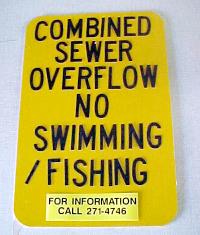
water, the opportunity for harmony exists."  Of course, that's only if you ignore the fact that these cities treat the Great Lakes like one big toilet:

"The Great Lakes basin is one of the most important freshwater
ecosystems on the planet - holding one fifth of the world's
freshwater," said the report's author Dr. Elaine MacDonald. "Yet, the
20 cities we evaluated are dumping the equivalent of more than 100
Olympic swimming pools full of raw sewage directly into the Great Lakes
every single day."

20061129_sign

This is the kind of stuff that has a lot higher immediate impact, and should be worked long before, tenuous claims of damage from CO2 production.

Market Manipulation...For Eight Minutes

A while back, I wrote of my conversation with a friend who was convinced that oil prices are set by a small cabal of traders, and that while they have been at $60-70 over the last several years, they would have been at $40 or less without the traders manipulating the price.  I won't go into my arguments again here, but I wrote that it would be virtually impossible to maintain a price artificially above the market clearing price for so long without 1) massive product gluts or 2) almost-impossible-to-hide widespread suppression of production involving thousands of parties.

Michael Giberson at the Knowledge Problem writes about a price-fixing case by natural gas traders.  Amaranth is accused of manipulating gas prices, and I won't judge their guilt or innocence.  But, apropos of my statement above, it is interesting to note that the key question is whether it was possible for the company to manipulate commodity prices for eight minutes.  It looks as if they tried it, but it also looks as if they were not successful (since the government is charging they attempted to manipulate the market, but is not trying to prove they succeeded in doing so).  Making it hugely absurd to think that anyone could do it for three or four years.

Why a Carbon Tax is Superior

I don't think that government action on greenhouse gasses is justified.  That's not to say that man is not helping nature warm the planet some, its that the man-made warming, when you strip away the exaggerations, does not justify the cost of preventing it.  Since I wrote 80+ pages on it here, I won't delve much further into it. 

However, if we are going to take action, a carbon tax is way, way better than cap and trade.  I used to think that cap and trade made more sense, but I have changed my mind.  Cap and trade systems have a lot of potential for error and abuse, but there is one issue that is not adequately discussed:  They are also a huge subsidy and protection for current businesses, effectively penalizing new entrants.

Why?  Because most cap and trade systems begin by giving out emissions credits to current industry incumbents.  These are credits that new entrants will have to purchase, tilting the playing field in favor of current industry leaders.  This is the kind of thing Europeans love, because their largest business interests effectively control the government and keep out new competition, causing their economies to stagnate.  Steven Milloy is one of the few folks raising the red flag on this issue:

Under
the LCEA, the federal government would annually issue rights or
"allowances" to emit GHGs. In the first year of the bill, slated as
2012, allowances would be issued for approximately 6.65 billion metric
tons of GHGs. The amount of allowances slightly decreases every year "“
for example, 6.59 billion metric tons in 2013, 6.53 billion metric tons
in 2014, etc. "“ until it finally levels out at 4.82 billion metric tons
in 2030 and beyond.

These allowances have monetary value "“ a lot.

Owners
of allowances can either use them to pay for their GHG emissions or
they can sell them to other emitters who need allowances. Emitters can
also simply pay the federal government directly to emit GHGs at a cost
of $12 per metric ton of carbon dioxide starting in 2012. This price is
slated to increase annually by the inflation rate plus 5 percent. By
2030 "“ and unrealistically assuming that no inflation occurs "“ the
pay-to-emit price would be about $27.50 per metric ton of carbon
dioxide.

Using the pay-to-emit price, the GHG emissions
allowances issued by the federal government in 2012 will have a
potential market value of $80 billion. The annual market value of these
government-issued allowances will rise to over $100 billion by 2018 and
hit $130 billion in 2030. It will only take about 10 years "“ exclusive
of any inflation "“ for value of the allowances issued by the government
to exceed $1 trillion.

And incredible as it sounds, the bulk of
these allowances "“ 76 percent for the first five years, declining to 47
percent by 2030 "“ will be given away at no charge to special interests
including private industry, farmers and states. This global warming
giveaway works out to a total of $1.34 trillion of free money "“ not
adjusted for inflation "“ that would be handed out to global warming
special interests from 2012-2030. After 2030, the annual amount of free
money handed out is about $65 billion, increasing by 5 percent per
year, exclusive of inflation.

Unfortunately, politicians will always favor an indirect tax over a direct tax because they are gutless and entirely free of any nagging principles.  Cap and trade systems would raise consumer prices at least as much as a carbon tax, but the price increase would appear to be made by industry and not due to a visible government tax.  Congress can point the finger at industry and say, it's not our fault, it's those greedy guys in industry driving up prices.

Further, the carbon tax is hard to game.  Everybody pays.  But cap and trade - Oh the beautiful potential to milk various constituencies for donations!  If the government sets up a program where some groups get credits for free, and some have to pay for them, well of course every industry is going to pour millions upon millions into politician's hands trying to make sure they are in the favored group. 

What a mess.  We are already seeing the huge distortions coming from nutty ethanol subsidies, and that is due to the pressure of just one industry (farmers and ADM).  Just think of the distortions form this program.  There may be a good chance that misguided attempts to manage greenhouse gasses may well be the largest threat to the American economy and free marketplace, well, ever.  Which, by the way, is why every Marxist and socialist on the face of the earth are right at the forefront of the global warming movement.

If you suspect that the world may be warming, but not nearly enough to justify such costs in terms of both dollars and lost freedom, you might want to read this.

A Gutless Tax

I understand the environmental logic to tax petroleum -- I don't particularly agree with it, but some sort of carbon-based tax is probably the least-bad way to achieve various environmental goals (I will leave for other posts whether these goals make any sense).

However, the Senate's proposal to tax oil companies directly, rather than the oil or petroleum products themselves, is a gutless chickenshit maneuver that is just so typical of politicians.  A tax on oil companies is less efficient than a direct carbon tax on the fuel (because it is operating less directly on price signals), but it makes sense to our political masters for several reasons:

  • Populist Congressman can argue to their constituencies that "we didn't tax you consumers, we taxed those evil bloated oil companies."  Of course, in the end, the money comes from consumers anyway.  That's just basic economics.
  • Oil companies, not politicians, get blamed for collecting the tax from consumers.  This is an tried-and-true approach, that has worked well with gasoline taxes embedded in pump prices.
  • When oil prices inevitably rise due to the tax, the Congress will use this oil price rise as a rallying cry to...increase taxes more.  It is the classic government win-win of proposing increased regulations to solve problems caused by government regulations.

This part is even worse:

Another measure, pushed by Sen. Jeff Bingaman, D-N.M., was aimed at
collected $10.7 billion in royalties the government has been unable to
collect because of flawed oil leasing contracts issued by the Interior
Department in 1998-99. The government would collect an excise tax on
any oil taken from the Gulf of Mexico, subject to royalties not being
paid.

Here is what happened:  The government wrote offshore lease/royalty contracts in a certain way.  Oil companies read the contract language, and entered into the contract as written, and subsequently invested billions of dollars to develop the leases.  More recently, as oil prices rose, the government thinks it made a bad deal, and should have written the contracts differently.  The solution for private companies who make a bad deal: live with it.  The solution for the government, though, it apparently to use the coercive power of the government to extract the royalties you failed to put in the contract 18 years ago via special excise taxes.

And don't even get me started on this farm subsidy program masquerading as energy policy:

The bill would funnel about $11 billion over 10 years into the
development of renewable fuels such as ethanol, biodiesel and power
from wind turbines in a combination of extensions of existing tax
breaks and new tax benefits. An additional $18 billion in tax breaks "”
from tax credits to clean and renewable energy bonds "” also were
approved.

We are making a mistake of epic proportions pouring money and regulatory breaks into ethanol.  Ethanol, in the form we ar investing in it in this country, does NOTHING to reduce our oil use or improve the environment or reduce CO2 emissions.  Nada.  All it does is increase taxes, increase fuel prices, increase food prices, and, soon, cause environmental problems as marginal lands are brought into corn production.  I made a plea to stop this before it is too late, ie before the industry becomes so entrenched it will be politically impossible to cut it off.  I fear we are rapidly approaching this point of no return.

Wither Supply and Demand, In Favor of the Oil Trading Cabal?

I had an odd and slightly depressing conversation with a friend the other night.  He is quite intelligent and well-educated, and in business is probably substantially more successful, at least financially, than I.

Somehow we got in a discussion of oil markets, and he seemed to find my position suggesting that oil prices are generally set by supply and demand laughable, so much so he eventually gave up with me as one might give up and change the subject on someone who insists the Apollo moon landings were faked. I found the conversation odd, like having a discussion with a fellow
chemistry PHD and suddenly having them start defending the phlogiston
theory of combustion. His core position, as best I could follow, was this:

  1. Limitations on supply in the US, specifically limitations on new oil field development and refinery construction, are engineered by oil companies attempting to keep prices high.
  2. Oil prices are set at the whim of oil traders in London and New York, who are controlled by US oil companies.  The natural price of oil today should be $30 or $40, but oil traders keep it up at $60.  While players upstream and downstream may have limited market shares, these traders act as a choke point that controls the whole market.  All commodity markets are manipulated, or at least manipulatable, in this manner
  3. Oil supply and demand is nearly perfectly inelastic. 
  4. If there really was a supply and demand reason for oil prices to shoot up to $60, then why aren't we seeing any shortages?
  5. Oil prices only rise when Texas Republicans are in office.  They will fall back to $30 as soon as there is a Democratic president.  On the day oil executives were called to testify in front of the Democratic Congress recently, oil prices fell from $60 to $45 on that day, and then went right back up.

Ignoring the Laws of Economics (Price caps and floors)

While everyone (mostly) knows that we are suspending disbelief when the James Bond villain seems to be violating the laws of physics, there is a large cadre of folks that do believe that our economic overlords can suspend the laws of supply and demand.   As it turns out, these laws cannot be suspended, but they can certainly be ignored.  Individuals who ignore supply and demand in their investment and economic decision making are generally called "bankrupt," at least eventually, so we don't always hear their stories (the Hunt brothers attempt to corner the silver market is probably the best example I can think of).  However, the US government has provided us with countless examples of actions that ignore economic reality.

The most typical example is in placing price caps.  The most visible example was probably the 1970's era caps on oil, gasoline, and natural gas prices and later "windfall profit" taxes.  The result was gasoline lines and outright shortages.  With prices suppressed below the market clearing price, demand was higher and supply was lower than they would be in balance. 

The my friend raised is different, one where price floors are imposed by industry participants or the government or more likely both working in concert.   The crux of my argument was not that government would shy away from protecting an industry by limiting supply, because they do this all the time. The real problem with the example at hand is that, by the laws of supply and demand, a price floor above the market clearing price should yield a supply glut.  As it turns out, supply guts associated with cartel actions to keep prices high tend to require significant, very visible, and often expensive actions to mitigate.  Consider two examples:

Realtors and their trade group have worked for years to maintain a tight cartel, demanding a 6% or higher agency fee that appears to be increasingly above the market clearing price.  The result of maintaining this price floor has been a huge glut of real estate agents.  The US is swimming in agents.  In an attempt to manage this supply down, realtors have convinced most state governments to institute onerous licensing requirements, with arcane tests written and administered by... the realtor's trade group.  The tests are hard not because realtors really need to know this stuff, but because they are trying to keep the supply down.   And still the supply is in glut.  Outsiders who try to discount or sell their own home without a realtor (ie, bring even more cheap capacity into the system) are punished ruthlessly with blackballs.  I have moved many times and have had realtors show me over 300 houses -- and you know how many For Sale By Owner homes I have been shown?  Zero.  A HUGE amount of effort is expended by the real estate industry to try to keep supply in check, a supply glut caused by holding rates artificially high. 

A second example of price floors is in agriculture.  The US Government, for whatever political reasons, maintains price floors in a number of crops.  The result, of course, has been a supply glut in these commodities.  Sopping up this supply glut costs the US taxpayer billions.  In some cases the government pays to keep fields fallow, in others the government buys up extra commodities and either stores them (cheese) or gives them away overseas.  In cases like sugar, the government puts up huge tarriff barriers to imports, otherwise the market would be glutted with overseas suppliers attracted by the artificially high prices.  In fact, most of the current subsidy programs for ethanol, which makes almost zero environmental or energy policy sense, can be thought of as another government program to sop up excess farm commodity supply so the price floor can be maintained.

I guess my point from these examples is not that producers haven't tried to impose price floors above the market clearing price, because they have.  And it is not even that these floors are not sustainable, because they can be if the government steps in to help with their coercive power and our tax money to back them.  My point is, though, that the laws of supply and demand are not suspended in these cases.  Price floors above the market clearing price lead to supply gluts, which require very extensive, highly visible, and often expensive efforts to manage.  As we turn now to oil markets, we'll try to see if there is evidence of such actions taking place.

The reasons behind US oil production and refining capacity constraints

As to his first point, that oil companies are conspiring with the government to artificially limit oil production and refining capacity, this certainly would not be unprecedented in industry, as discussed above.  However, any historical study of these issues in the oil industry would make it really hard to reach this conclusion here.  There is a pretty clear documented record of oil companies pushing to explore more areas (ANWR, offshore) that are kept off-limits due to environmental pressures.  While we have trouble imagining the last 30 years without Alaskan oil, the US oil companies had to beg Congress to let them build the pipeline, and the issue was touch and go for a number of years.  The same story holds in refining, where environmental pressure and NIMBY concerns have prevented any new refinery construction since the 1970's (though after years and years, we may be close in Arizona).  I know people are willing to credit oil companies with just about unlimited levels of Machiavellianism, but it would truly be a PR coup of unprecedented proportions to have maintained such a strong public stance to allow more capacity in the US while at the same time working in the back room for just the opposite.

The real reason this assertion is not credible is that capacity limitations in the US have very clearly worked against the interests of US oil companies.  In production, US companies produce on much better terms from domestic fields than they do when negotiating with totalitarian regimes overseas, and they don't have to deal with instability issues (e.g. kidnapping in Nigeria) and expropriation concerns.  In refining, US companies have seen their market shares in refined products fall since the 1970s.  This is because when we stopped allowing refinery construction in this country, producing countries like Saudi Arabia went on a building boom.  Today, instead of importing our gasoline as crude to be refined in US refineries, we import gas directly from foreign refineries.  If the government is secretly helping oil companies maintain a refining capacity shortage in this country, someone forgot to tell them they need to raise import duties to keep foreign suppliers from taking their place. 

What Oil Traders can and cannot do

As to the power of traders, I certainly believe that if the traders could move oil prices for sustained periods as much as 50% above or below the market clearing price, they would do so if it profited them.  I also think that speculative actions, and even speculative bubbles, can push commodity prices to short-term extremes that are difficult to explain by market fundamentals.  Futures contracts and options, with their built in leverage, allow even smaller players to take market-moving positions.  The question on the table, though, is whether oil traders can maintain oil prices 50% over the market clearing prices for years at a time.  I think not.

What is often forgotten is that companies like Exxon and Shell control something like 4-5% each of world production (and that number is over-stated, since much of their production is as operator for state-owned oil companies who have the real control over production rates).  As a point of comparison, this is roughly the same market Toshiba has in the US computer market and well below Acer's.  As a result, there is not one player, or even several working in tandem, who hold any real power in crude markets.  Unless one posits, as my friend does, that NY and London traders somehow sit astride a choke point in the world markets.

But here is the real problem with saying that these traders have kept oil prices 50% above the market clearing price for the last 2-3 years:  What do they do with the supply glut?  We know from economics, as well as the historic examples reviewed above, that price floors above the clearing price should result in a supply glut.  Where is all the oil?

Return to the example of when the Hunt's tried to corner the silver market.  Over six months, they managed to drive the price from the single digits to almost $50 an ounce.  Leverage in futures markets allowed them to control a huge chunk of the available world supply.  But to profit from it (beyond a paper profit) the Hunts either had to take delivery (which they were financially unable to do, as they were already operating form leveraged positions) or find a buyer who accepted $50 as the new "right" price for silver, which they could not.  No one wanted to buy at $50, particularly from the Hunts, since they knew the moment the Hunt's started selling, the price would crash.  As new supplies poured onto the market at the higher prices, the only way the Hunt's could keep the price up was to pour hundreds of millions of dollars in to buy up this excess supply.  Eventually, of course, they went bankrupt.  But remember the takeaway:  They only could maintain the artificially higher commodity price as long as they kept buying excess capacity, a leveraged Ponzi game that eventually collapsed.

So how do oil traders' supposedly pull off this feat of keeping oil prices elevated about the market clearing price?  Well, there is only one way:  It has to be stored, either in tanks or in the ground.  The option of storing the extra supplies in tanks is absurd, especially over a period of years - after all, at its peak, $60 of silver would sit on the tip of my finger, but $60 of oil won't fit in the trunk of my car.  The world oil storage capacity is orders of magnitude too low.  So the only real option is to store it in the ground, ie don't allow it to get produced. 

How do traders pull this off?  I have no idea.  Despite people's image, the oil producer's market is incredibly fragmented.  The biggest companies in the world have less than 5%, and it rapidly steps down from there. It is actually even more fragmented than that, because most oil production is co-owned by royalty holders who get a percentage of the production.  These royalty holders are a very fragmented and independent group, and will complain at the first sign of their operator not producing fast and hard enough when prices are high.  To keep the extra oil off the market, you would have to send signals to a LOT of people.  And it has to be a strong and clear signal, because price is already sending the opposite signal.  The main purpose of price is in its communication value -- a $60 price tells producers a lot about what and how much oil should be produced (and by the way tells consumers how careful to be with its use).  To override this signal, with thousands of producers, to achieve exactly the opposite effect being signaled with price, without a single person breaking the pack, is impossible.  Remember our examples and the economics - a sustained effort to keep prices substantially above market clearing prices has to result in visible and extensive efforts to manage excess supply.

Also, the other point that is often forgotten is that private exchanges can only survive when both Sellers AND buyers perceive them to be fair.  Buyers are quickly going to find alternatives to exchanges that are perceived to allow sellers to manipulate oil prices 50% above the market price for years at a time.  Remember, we think of oil sellers as Machiavellian, but oil buyers are big boys too, and are not unsophisticated dupes.  In fact, it was the private silver exchanges, in response to just such pressure, that changed their exchange rules to stop the Hunt family from continuing to try to corner the market.  They knew they needed to maintain the perception of fairness for both sellers and buyers.

Supply and Demand Elasticity

From here, the discussion started becoming, if possible, less grounded in economic reality.  In response to the supply/demand matching issues I raised, he asserted that oil demand and supply are nearly perfectly inelastic.  Well, if both supply and demand are unaffected by price, then I would certainly accept that oil is a very, very different kind of commodity.  But in fact, neither assertion is true, as shown by example here and here.  In particular, supply is quite elastic.  As I have written before, there is a very wide range of investments one can make even in an old existing field to stimulate production as prices rise.  And many, many operators are doing so, as evidenced by rig counts, sales at oil field services companies, and even by spam investment pitches arriving in my in box.

I found the statement "if oil prices really belong this high, why have we not seen any shortages" to be particularly depressing.  Can anyone who sat in at least one lecture in economics 101 answer this query?  Of course, the answer is, that we have not seen shortages precisely because prices have risen, fulfilling their supply-demand matching utility, and in the process demonstrating that both supply and demand curves for oil do indeed have a slope.  In fact, shortages (e.g. gas lines or gas stations without gas at all) are typically a result of government-induced breakdowns of the pricing mechanism.  In the 1970's, oil price controls combined with silly government interventions (such as gas distribution rules**) resulted in awful shortages and long gas lines.  More recently, fear of "price-gouging" legislation in the Katrina aftermath prevented prices from rising as much as they needed to, leading to shortages and inefficient distribution.

Manipulating Oil Prices for Political Benefit

As to manipulating oil or gas prices timed with political events (say an election or Congressional hearings), well, that is a challenge that comes up all the time.  It is possible nearly always to make this claim because there is nearly always a political event going on, so natural volatility in oil markets can always be tied to some concurrent "event."  In this specific case, the drop from $60 to $35 just for a Congressional hearing is not even coincidence, it is urban legend.  No such drop has occurred since prices hit 60, though prices did drop briefly to 50.  (I am no expert, but in this case the pricing pattern seen is fairly common for a commodity that has seen a runup, and then experiences some see-sawing as prices find their level.)

This does not mean that Congressional hearings did not have a hand in helping to drive oil price futures.  Futures traders are constantly checking a variety of tarot cards, and indications of government regulatory activity or legislation is certainly part of it.  While I guess traders purposely driving down oil prices ahead of the hearing to make oil companies look better is one possible explanation;  a more plausible one (short of coincidence, since Congress has hearings on oil and energy about every other month) is that traders might have been anticipating some regulatory outcome in advance of the hearing, that became more less likely once the hearings actually occurred.  *Shrug*  Readers are welcome to make large short bets in advance of future Congressional energy hearings if they really think the former is what is occurring. 

As to a relationship between oil prices and the occupant of the White House, that is just political hubris.  As we can see, real oil prices rose during Nixon, fell during Ford, rose during Carter, fell precipitously during Reagan, were flat end to end for Bush 1 (though with a rise in the middle) and flat end to end for Clinton.  I can't see a pattern.

If Oil Companies Arbitrarily Set Prices, Why Aren't They Making More Money?

A couple of final thoughts.  First, in these heady days of "windfall" profits, Exxon-Mobil is making a profit margin of about 9% - 10% of sales, which is a pretty average to low industrial profit margin.  So if they really have the power to manipulate oil prices at whim, why aren't they making more money?  In fact, for the two decades from 1983 to 2002, real oil prices languished at levels that put many smaller oil operators out of business and led to years of layoffs and down sizings at oil companies.  Profit margins even for the larges players was 6-8% of sales, below the average for industrial companies.  In fact, here is the profitability, as a percent of sales, for Exxon-Mobil over the last 5 years:

2006:  10.5%

2005:  9.7%

2004:  8.5%

2003:  8.5%

2002:  5.4%

2001:  7.1%

Before 2001, going back to the early 80's, Exxon's profits were a dog.  Over the last five years, the best five years they have had in decades, their return on average assets has been 14.58%, which is probably less than most public utility commissions allow their regulated utilities.  So who had their hand on the pricing throttle through those years, because they sure weren't doing a very good job!  But if you really want to take these profits away (and in the process nuke all the investment incentives in the industry) you could get yourself a 15 to 20 cent decrease in gas prices.  Don't spend it all in one place.

** One of the odder and forgotten pieces of legislation during and after the 1972 oil embargo was the law that divided the country into zones (I don't remember how, by counties perhaps).  It then said that an oil company had to deliver the same proportion of gas to each zone as it did in the prior year  (yes, someone clearly took this right out of directive 10-289).  It seemed that every Representative somehow suspected that oil companies in some other district would mysteriously be hoarding gas to their district's detriment.  Whatever the reason, the law ignored the fact that use patterns were always changing, but were particularly different during this shortage.  Everyone canceled plans for that long-distance drive to Yellowstone.  The rural interstate gas stations saw demand fall way off.  However, the law forced oil companies to send just as much gas to these stations (proportionally) as they had the prior year.  The result was that rural interstates were awash in gas, while cities had run dry.  Thanks again Congress.

More on Price Gouging

Gary Galles at Mises has a good post on why currently proposed "anti-gas-gouging" law is rediculously vague and effectively ex-post-facto law.  I have made this point before as well.

I wanted to comment on something different.  As he begins:

In May, the House of Representatives passed a bill that could lead to
fines as high as $3 million per day for gasoline price gouging, which
it defined as charging a price that "grossly exceeds the average
price"¦offered for sale by that person during the 30 days prior" or
"grossly exceeds the price at which the same or similar gasoline"¦was
readily obtainable in the same area from other competing sellers."

Lets take these two cases in reverse order.  If I am charging a prices that "grossly exceeds the price at which the same or similar gasoline"¦was
readily obtainable in the same area from other competing sellers," then what for God's sakes is the harm?  People will just go to one of the "readily obtainable" other sources.  My business will take a beating, but that's my problem.

The first case is an open invitation for gas lines.  It does not say "grossly exceeds the average
price"¦offered for sale by that person during the 30 days prior unless there is some kind of supply discontinuity or change in wholesale prices."   It sets up a clear if-then:  If you raise your prices by some amount we later rule to be too much, we can fine you $3 million per day.  In the confusion of a supply disruption, gas stations will be afraid to raise their prices despite the new supply-demand reality. They will be afraid of this kind of arbitrary enforcement.  Therefore, the first 100 random people who show up to top off their tanks  or fill their generators to keep their TV running will get the available supply, rather than letting price allocate the gas to the people who value it the most.

I lived through gas lines of the 1970's.  In fact, as the low-driver-on-the-totem-pole, it was my job in the family to cruise around town looking for an open station and then sitting in whatever line I found.  I don't think younger people remember, but in major cities (not in the countryside) in the 1970s, there were weeks when there simply was no gas to be found.  Since that experience, I have pleaded to allow gas gouging in supply emergencies.

China Continues to Subsidize Lower Prices for Consumers

From today's WSJ ($) online:

Turning aside growing congressional anger over low everyday prices, President George W. Bush's
administration today will reject demands that it formally accuse
Beijing of subsidizing lower prices for U.S. consumers.

With U.S. lawmakers gearing up to punish China for using Chinese funds to subsidize low U.S. consumer prices, Treasury
Secretary Henry Paulson is expected to use a semiannual currency
report, to be released today, to reinforce his calls for Beijing to
allow prices in the U.S. to rise faster....

OK, I confess I fibbed a bit.  The actual article reads:

Turning aside growing congressional anger over the
U.S. trade deficit with China, President George W. Bush's
administration today will reject demands that it formally accuse
Beijing of "manipulating" its currency to give Chinese companies an
edge over American businesses.

With U.S. lawmakers gearing up to punish China for
keeping the yuan artificially weak against the dollar, Treasury
Secretary Henry Paulson is expected to use a semiannual currency
report, to be released today, to reinforce his calls for Beijing to
allow the yuan to rise faster. But Mr. Paulson won't brand China a
currency manipulator despite congressional demands that he do so.

But it means the same thing as my version.  Thanks to Congress for looking after us consumers.  Our Chinese sister publication Panda Blog addressed these issues from the Chinese perspective a while back.  In short, the Chinese are wondering what we are complaining about:

Our Chinese government continues to pursue a policy
of export promotion, patting itself on the back for its trade surplus
in manufactured goods with the United States.  The Chinese government
does so through a number of avenues, including:

  • Limiting yuan convertibility, and keeping the yuan's value artificially low
  • Imposing strict capital controls that limit dollar reinvestment to low-yield securities like US government T-bills
  • Selling exports below cost and well below domestic prices (what
    the Americans call "dumping") and subsidizing products for export

It is important to note that each and every one of these
government interventions subsidizes US citizens and consumers at the
expense of Chinese citizens and consumers.  A low yuan makes Chinese
products cheap for Americans but makes imports relatively dear for
Chinese.  So-called "dumping" represents an even clearer direct subsidy
of American consumers over their Chinese counterparts.  And limiting
foreign exchange re-investments to low-yield government bonds has acted
as a direct subsidy of American taxpayers and the American government,
saddling China with extraordinarily low yields on our nearly $1
trillion in foreign exchange.   Every single step China takes to
promote exports is in effect a subsidy of American consumers by Chinese
citizens.

This policy of raping the domestic market in pursuit of exports
and trade surpluses was one that Japan followed in the seventies and
eighties.  It sacrificed its own consumers, protecting local producers
in the domestic market while subsidizing exports.  Japanese consumers
had to live with some of the highest prices in the world, so that
Americans could get some of the lowest prices on those same goods.
Japanese customers endured limited product choices and a horrendously
outdated retail sector that were all protected by government
regulation, all in the name of creating trade surpluses.  And surpluses
they did create.  Japan achieved massive trade surpluses with the US,
and built the largest accumulation of foreign exchange (mostly dollars)
in the world.  And what did this get them?  Fifteen years of recession,
from which the country is only now emerging, while the US economy
happily continued to grow and create wealth in astonishing proportions,
seemingly unaware that is was supposed to have been "defeated" by Japan.

We at Panda Blog believe it is insane for our Chinese government
to continue to chase the chimera of ever-growing foreign exchange and
trade surpluses.  These achieved nothing lasting for Japan and they
will achieve nothing for China.  In fact, the only thing that amazes us
more than China's subsidize-Americans strategy is that the Americans
seem to complain about it so much.  They complain about their trade
deficits, which are nothing more than a reflection of their incredible
wealth.  They complain about the yuan exchange rate, which is set today
to give discounts to Americans and price premiums to Chinese.  They
complain about China buying their government bonds, which does nothing
more than reduce the costs of their Congress's insane deficit
spending.  They even complain about dumping, which is nothing more than
a direct subsidy by China of lower prices for American consumers.

And, incredibly, the Americans complain that it is they that run
a security risk with their current trade deficit with China!  This
claim is so crazy, we at Panda Blog have come to the conclusion that it
must be the result of a misdirection campaign by CIA-controlled
American media.  After all, the fact that China exports more to the US
than the US does to China means that by definition, more of China's
economic production is dependent on the well-being of the American
economy than vice-versa.  And, with nearly a trillion dollars in
foreign exchange invested heavily in US government bonds, it is China
that has the most riding on the continued stability of the American
government, rather than the reverse.  American commentators invent
scenarios where the Chinese could hurt the American economy, which we
could, but only at the cost of hurting ourselves worse.  Mutual Assured
Destruction is alive and well, but today it is not just a feature of
nuclear strategy but a fact of the global economy.