Eating Your Seed Corn

I found this to be one of the most immoral statements I have read in a long time (bold added)

Saez and Diamond argue that the right marginal tax rate for North Atlantic societies to impose on their richest citizens is 70%.

It is an arresting assertion, given the tax-cut mania that has prevailed in these societies for the past 30 years, but Diamond and Saez’s logic is clear. The superrich command and control so many resources that they are effectively satiated: increasing or decreasing how much wealth they have has no effect on their happiness. So, no matter how large a weight we place on their happiness relative to the happiness of others – whether we regard them as praiseworthy captains of industry who merit their high positions, or as parasitic thieves – we simply cannot do anything to affect it by raising or lowering their tax rates.

The unavoidable implication of this argument is that when we calculate what the tax rate for the superrich will be, we should not consider the effect of changing their tax rate on their happiness, for we know that it is zero. Rather, the key question must be the effect of changing their tax rate on the well-being of the rest of us.

From this simple chain of logic follows the conclusion that we have a moral obligation to tax our superrich at the peak of the Laffer Curve: to tax them so heavily that we raise the most possible money from them – to the point beyond which their diversion of energy and enterprise into tax avoidance and sheltering would mean that any extra taxes would not raise but reduce revenue.

Another way to state the passage in bold is, "if one can convince himself he will be happier with another person's money than that other person would be, it is not only morally justified, but a moral imperative to take it."

This is the moral bankruptcy of the modern welfare state laid bare for all to see.  Not sure if this even deserves further comment.  Either you see the immorality or you bring a lot of very different assumptions about morality to the table than I.  For those of you who accept the quoted statement, how are you confident you will always be the taker, the beneficiary?  You might be if the box is drawn just around the US, but from a worldwide perspective all you folks in the American 99% may find yourselves in the world's 1%.

And from a purely practical standpoint, while I suppose one might argue that the total happiness in this particular instant could be maximized by taking most all the rich's marginal income, what happens tomorrow?  It's like eating your seed corn.  Taking capital out of the hands of the folks who have been the most productive at employing capital and helicopter dropping it on the 99% feels good right up until you need some job creation or economic growth or productivity improvement.

To this day, over 30 years after I had it explained in economics class, I am still floored by the line I read in the introductory macro textbook describing the Keynesian manipulation of Y=C+I+G+(X-M) to demonstrate a "multiplier" effect.  The part that I never could get over was at the very beginning when they said "I, or Investment, is considered exogenous" - in other words, the other variables could be freely manipulated, the government could grow and deficit spend as much as it liked, and investment would be unaffected.  Huh?

My memory was that Keynesians considered "I" a loser.  They felt anything that was not G or C actually acted as a drag, at least in the near term (in the long run we will all be dead).  This despite the fact that "I" is the only thing that grows the pie over time.

Sick

Went away for a few days with my wife and came down with some kind of flu thing everyone we know in Phoenix seems to have.  Temperature, sore throat, coughing, achy joints, headache but fortunately no barfing.  Without the vomiting, I can power through what I have to get done, its just not fun.

I am wondering if the CDC uses social media data to track disease outbreaks.  I have seem Twitter data showing dynamically when such and such event happened by geotagged Twitter traffic.  Be interesting to do that with all tweets with the word "sick".

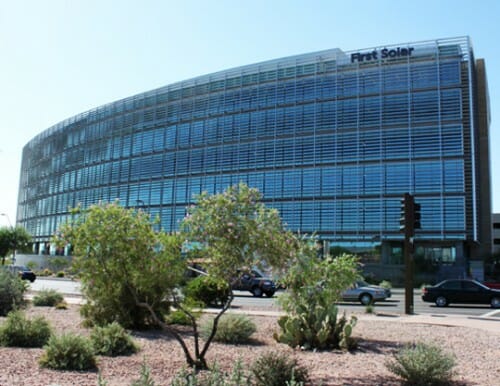
First Solar Update

A few years ago I was asked to give a presentation in front of a group of Phoenix business leaders on climate and alternative energy.  I can't remember what particular group it was, but it was some public-private group that was heavily invested in advocating for local subsidies to promote strategic businesses - the sort of local MITI that most large cities have, that has this delusion that they can ramp up the city's growth by focusing public and private investment into a few selected industries (that they select, of course).

I told them that I thought their focus on solar manufacturing was dumb.  First, the whole idea that because Arizona is a good solar market meant that it should have some advantage in solar manufacturing made absolutely no sense.  This only makes sense for products with high transportation costs or a particular input cost that can be gotten more cheaply in one particular area (the location of aluminum manufacturing near cheap electricity in the Northwest comes to mind).  By the same logic all car manufacturers would be located in LA.

Second, I said that the whole solar business was completely driven by subsidies.  If the subsidies were to go away, the heart of the business would go away faster than pets.com.  I specifically mentioned First Solar in a positive context here, saying that though they where wholly dependent on subsidies for their revenues, they at least acknowledged as a corporate strategy they needed to get costs low enough to compete without subsidies.  (Someday, solar will get to that point, I hope, but I am skeptical that current approaches will yield the breakthrough, but that is another discussion).

If you want to understand the financial problems First Solar is having, let me show you four items.

First, from their 2010 annual report:

Geographic Risk. Our solar modules are presently predominantly sold to our customers for use in solar power systems concentrated in a single geographic region, Germany. This concentration of our sales in one geographic region exposes us to local economic risks and local public policy and regulatory risk in German.

This is way back in the notes on page 133.  By the way, I took a whole course in business school on reading financial reports.  Here is the key lesson for those not in the financial industry:  read them from the back.  Skip all the glossy crap at the front, go straight to the notes.

OK, here is the second bit of information.  Here is a world map of solar insolation, which is essentially the total solar energy available to produce power in a location when adjusted for atmosphere, weather, latitude, etc.

See Germany?  I won't insult your geographic knowledge by pointing at it, but much of Germany is in that yellow-green color which, for solar potential, means (in scientific terms) "it sucks."  Let's zoom in, and compare it to the US to get a feel for it (combined from two charts here)

Apparently the better sites in Germany have the same solar potential as ... Seattle!  The sliver of absolute best sites in Germany have approximately the same solar potential as Buffalo, NY.

So we have a company whose fortunes are dedicated almost entirely to selling solar panels into one of the most unpromising solar sites in the world.   Why is Germany buying so much solar?

OK, here is the third bit of information.  For years Germany had enormous feed-in tariffs (mandated above-market minimum prices)  for solar electricity:

The German feed-in tariff scheme has been in operation since 1991 and is regarded as one of the most successful in the world. In Germany, feed-in tariff rates are differentiated according to the source of the renewable energy. Separate tariffs are determined for biogas, biomass, hydroelectric, geothermal, solar and wind energy sources. The tariff paid for solar generators varies between EUR 45.7c/kWh and EUR 57.4c/kWh, depending on the capacity of the system and other design features. The tariff is greater for generators that are attached to the roof of a building or structure and greater again for generators that are attached to another part of a building. In Germany, the feed-in tariff is paid for a period of 20 years

Note the language from several years ago where "most successful" is determined without references to costs.

0.574 Euros per kWh is equal to about $0.75 today and even more several years ago when exchange rates were higher.  Remember this is a wholesale price, and should be compared to a $0.04 to $0.06 wholesale electricity price in the US  (I use US numbers to as its not clear to me Europe has a particularly competitive wholesale market.  The French have some sort of fixed price system set around $0.06).

However one wants to look at it, these are enormous subsidies.  People putting up solar panels in Germany were getting paid 10-15x what a market price for the same electricity might have been.

Finally, here is the fourth piece of evidence leading to First Solar's woes.  In 2010 and 2011 Germany, whose consumers began to balk at paying the highest electricity rates in the world in order to subsidize the method of electrical generation least suitable to Germany, began substantially cutting these tariffs.  In 2012 they will cut them even further:

German Environment Minister Norbert Roettgen and Economy Minister Philipp Roesler are set to hold a press conference on Thursday to outline the government's new approach on subsidies. However, the indications are that the cuts will be heavier than the market has been expecting:

  • a 30% cut in the feed-in-tariff (FIT) to 13.5 cents per kilowatt hour for new large solar installations
  • and a 20% cut in the FIT to 19.5 cents for new small plants

The market has of course been expecting cuts in the German FIT system. However, this news is decidedly worse than expected and likely to continue to pressure solar stocks - particularly those such as Yingli (YGE) with a significant exposure to German solar demand.

From a peak of $0.75 per kWh, Germany will now pay $0.255 per kWh for smaller installations, still four times the market price for wholesale electricity but only a third of what they paid during First Solar's boom years.  As I wrote yesterday, Germany was essentially paying $2 for milk from brown cows and $25 for milk from black cows.  This can't be sustained.

If one assumes a wholesale electricity price of 6 cents, First Solar's German customers were getting a 92% subsidy.  Sure, First Solar now faces other problems like Chinese competition and they have shot themselves in the foot on quality, but at the end of the day the only way they can survive is to convince some other government to turn on the taxpayer money spigot to keep them in business.  I am hoping we in Arizona and the US will not be the suckers, but I fear that we will.  One can argue the projects I discussed the other day, including the one where we taxpayers loaned First Solar the money to sell its solar panels to its own subsidiary, are evidence of this.  My guess is that First Solar will be throwing a lot of money and time towards Obama, praying for his re-election.

Image Search Tool

My readers recently taught me this trick for trying to identify an image.  Go to this link:

https://www.google.com/imghp

Click on the little camera in the right-hand side of the search box.  This brings up a sort of reverse image search, where you can upload an image or put in an image URL and it will give you a guess as to what it is.

I Get Queasy Just Looking At These Photos

The Article I Would Write, If I Didn't Have A Day Job

Update:  I found a bit more time to give some more background on First Solar and German feed in tariffs here.

If I had the time, I would love to try to research and list every subsidy recieved by a company like First Solar.  Here are just a few:

First Solar is an Arizona-based manufacturer of solar panels. In 2010, the Obama administration awarded the company $16.3 million to expand its factory in Ohio -- a subsidy Democratic Gov. Ted Strickland touted in his failed re-election bid that year.

Five weeks before the 2010 election, Strickland announced more than a million dollars in job training grants to First Solar. The Ohio Department of Development also lent First Solar $5 million, and the state's Air Quality Development Authority gave the company an additional $10 million loan.

After First Solar pocketed this $17.3 million in government grants and $15 million in government loans, Ex-Im entered the scene.

In September 2011, Ex-Im approved $455.7 million in loan guarantees to subsidize the sale of solar panels to two solar farms in Canada. That means if the solar farm ever defaults, the taxpayers pick up the tab, ensuring First Solar gets paid.

But the buyer, in this case, was First Solar.

A small corporation called St. Clair Solar owned the solar farm and was the Canadian company buying First Solar's panels. But St. Clair Solar was a wholly owned subsidiary of First Solar. So, basically, First Solar was shipping its own solar panels from Ohio to a solar farm it owned in Canada, and the U.S. taxpayers were subsidizing this "export."

But this is just a few of them, even on this deal.  For example, the Canadian solar farm very likely picked up federal and provincial subsidies from Canada, and even more likely gets some kind of subsidized feed-in tariff (meaning that an above-market wholesale rate is paid for its electricity).  This sort of feed-in tariff, which is paid by electricity consumers, is wholly un-transparent and likely makes up the large bulk of solar subsidies.   I know the state of Arizona threw a lot of money at First Solar as well (which is headquartered in the Phoenix area.)

During First Solar's boom years, the company was mainly supported by sales to Germany, probably one of the worst solar sites in the world after perhaps Seattle.  But the German government mandated feed-in tariffs for solar that were five times (or more) the market price for electricity.  It was like saying that, while milk generally goes for $2 a gallon, the government mandated that milk from  brown cows could be sold for $10 a gallon, and what's more, consumers had to buy it.

The House Your Tax Money Built

Anyone Know What This Is?

I found this picture, c. 1961, in some old photos my parents took.  From the photos around it, it looks to have been taken on a driving tour of ante-bellum mansions in Louisiana and Mississippi.

Update:   Readers identified it as Longwood, an old mansion in Mississippi, which appears to have been fixed up since this was take.n

Let Them Eat Tofu

This is just amazing -- Bloomberg has become too nutty even to caricature.  From CBS NY via Overlawyered

Mayor Michael Bloomberg’s food police have struck again!

Outlawed are food donations to homeless shelters because the city can’t assess their salt, fat and fiber content, reports CBS 2’s Marcia Kramer.

Glenn Richter arrived at a West Side synagogue on Monday to collect surplus bagels — fresh nutritious bagels — to donate to the poor. However, under a new edict fromBloomberg’s food police he can no longer donate the food to city homeless shelters.

It’s the “no bagels for you” edict.

“I can’t give you something that’s a supplement to the food you already have? Sorry that’s wrong,” Richter said.

Richter has been collecting food from places like the Ohav Zedek synagogue and bringing it to homeless shelters for more than 20 years, but recently his donation, including a “cholent” or carrot stew, was turned away because the Bloomberg administration wants to monitor the salt, fat and fiber eaten by the homeless.

My Years of Experience with Public Discourse, Particularly in the Climate Debate, Summarized in One Chart


Bracket Slaughter

Wow, did I ever stink it up with my brackets over the weekend.  Worst I have ever done, and it had nothing to do with missing the two 15-2 upsets (everybody missed those).  The only good news is that I am ahead of my son Nic.  My traditional bias against all schools Ohio definitely hurt me.

Anyway, congrats to those who were far more prescient:

Leaderboard after 48 games - See full standings
Bracket Rank Points
Henry Chinaski 1 88
Mick Langan 2 80
Todd Ramsey 3 80
Todd Ramsey 4 80
Kevin Spires 5 80
Bracket Rank Points
Dan D. 6 79
Martin Linhart #2 7 74
Jimbeaux Evans #2 8 73
Scott Strattner 9 73
President Obama 10 72

I am not sure who does it, but we have a reader who faithfully enters the President's bracket into the pool each year, and I must say that Barack does seem to know his college hoops.

UPDATE:  Special congrats to Mike Langan, who due to the vagaries of the CoyoteBlog traditional scoring system is in second, but his bracket based on number of correct picks is actually in the top 50 of 88,000+ brackets at PickHoops.com.

Thought for the Day - Health Care and Education

The most frequent justification I see from the Left for increasing government involvement and control of the health care system is that the US spends more per capita on health care than any other country but apparently gets little extra benefit from the spending in terms of health outcomes**.

Intriguingly, the exact same statement can be made of the American education system, which is already nearly fully nationalized.  We spend more per capita than any other country and get only middling results.  I wonder why those who use high spending with modest results as a justification for rethinking the health care system do not come to the same conclusion for the public education system?

To some extent, the US spends more on education and health care because we think are critical and because we are wealthier.  We spend on items way down the Pareto chart where we get less bang for the buck because we can.   And to my mind, it's no coincidence that both health care and education are dominated by third part expenditures.  Take the price value decision making out of the ultimate consumers hands, and, well, the whole price-value equation is bound to get screwed up.

** There are several reasons US often looks bad in these health comparisons.  The first is that we have a lot of life-shortening habits (eating, smoking, driving, crime) completely out of control of the health care industry.  So our lifespans are shorter, but control for those exogenous factors and our health care system looks among the best.  Check out this data, which shows that correcting for crime and accidents, US has the highest life expectancy in the world.

The other problem is the data is often cherry-picked by academics sympathetic to the state health care model.  As seen in the link above, we have the highest cancer survival rates in the world, and the highest life expectancy for people who reach 65.   Even our supposed out-groups, such as black males, have higher cancer survival rates in the US than the average in most European countries.  But you seldom see these metrics included in comparisons.

I also refer you to an oldie but goodie, showing how a study failed to correct for differences in lifestyles between countries.

Danger of the Mono-Culture

The problem with the media is not outright bias, but an intellectual mono-culture that fails to exercise the most basic skepticism when stories fit their narrative.

By the way, I find it likely that there are factories in China making products with household names for western markets that have practices from wildly unsafe to outright slavery that deserve shaming and boycotts, as a minimum, when discovered.

But I often find the discourse around "sweatshops" to be colored by weterners' middle class notions of what our own personal alternatives are.  "I would never work for a $1 a day..."  Sure, but your alternative is not 15 hours a day in a rice paddy with the constant threat of outright death and starvation for your entire family if one years' crops fail.

Everything I Need To Know About The Effect of Metrics on Police Behavior I Learned from The Wire

Scathing report on how NY police gamed the process to improve their reported crime numbers.  Nothing in this should be the least surprising to anyone who watched a few seasons of The Wire.

These are not just accounting shenanigans.  There were actions the directly affected the public and individual liberty.  People were rounded up on the street on BS charges to pad arrest stats while real, substantial crimes went ignored in a bid to keep them out of the reported stats.

There is one part in here that is a good illustration of public vs. private power.  People who fear corporations seem to have infinite trust for state institutions.  But the worst a corporation was ever able to do to a whistle blower was fire him.  This is what the state does:

For more than two years, Adrian Schoolcraftsecretly recorded every roll call at the 81st Precinct in Brooklyn and captured his superiors urging police officers to do two things in order to manipulate the "stats" that the department is under pressure to produce: Officers were told to arrest people who were doing little more than standing on the street, but they were also encouraged to disregard actual victims of serious crimes who wanted to file reports.

Arresting bystanders made it look like the department was efficient, while artificially reducing the amount of serious crime made the commander look good.

In October 2009, Schoolcraft met with NYPD investigators for three hours and detailed more than a dozen cases of crime reports being manipulated in the district. Three weeks after that meeting—which was supposed to have been kept secret from Schoolcraft's superiors—his precinct commander and a deputy chief ordered Schoolcraft to be dragged from his apartment and forced into the Jamaica Hospital psychiatric ward for six days.

Trying to Start a Business in Tennessee

As I wrote previously, I am entering business in Tennessee, trying to reopen some closed TVA campgrounds.  I was initially pissed off that Tennessee is one of the few states that double taxes S-corp earnings.  I expect this kind of BS in California, but I keep finding more Tennessee taxes I have to pay.  Here is what I have so far:

  • Pay annual Secretary of State registration fee (Fixed $)
  • Must collect state sales tax (% of revenue)
  • Must collect county sales tax (% of revenue)
  • Must collect a county lodging tax (% of lodging revenue)
  • Pay state Franchise tax (% of net worth)
  • Pay state Excise tax (% of corporate earnings, even for S-corp)
  • Pay something called a county business tax (% of revenues)
  • Pay annual registration fee for county business tax (fixed $)
  • Withhold employee state income taxes (% of wages)
  • Pay state unemployment taxes (% of wages)
  • Pay state individual income tax (% of pass-through corporate earnings)
  • Pay county property tax (% of assessed asset value)

I am sure I am missing a few.  Except for #2 and #3 which are collected together, every single one of these requires a separate registration and separate monthly or annual filing.

Boo for Tennessee

My company is moving into Tennessee as a campground operator.  I was disappointed to see Tennessee is one of only a couple of states that double tax s-corporation earnings.  The state takes a straight 6.5% cut of all corporate earnings, even of an S-corp, and then charges regular income tax rates on the same income as it passes through to the individual.  This makes Tennessee one of the few states where, from a state tax perspective, S-corps are worse than C-corps, because if you are going to be double taxed, at least with the C-corp you can indefinitely delay taxation by not issuing dividends.
PS- TN lodging tax rates are horrendous.  Whenever I see tax rates higher than comparable rates in CA, I know they are too high.

Server Issues

Not really sure what is going on, but you may get intermittent server errors.  These may clear with a page refresh but something is definitely broken.

Things I Did Not Know

Survivors of lightening strikes are often left with unique fractal scars.

I can just see someone walking up to one of these folks

"Dude, where did you get those amazing tats?"

"Forget it.  The price is too high."

Last Chance to Submit a Bracket

Bad Economy + High Minimum Wage + Lifetime Employment =

via Zero Hedge


Seventh Annual NCAA Bracket Challenge

Note: This post sticky through 3/15.  Look below for newest posts.

Back by popular demand is the annual Coyote Blog NCAA Bracket Challenge.  We typically have about 150 entries.  Yes, I know that many of you are bracketed out, but for those of you who are self-employed and don’t have an office pool to join or who just can’t get enough of turning in brackets, this pool is offered as my public service.

Everyone is welcome, so send the link to friends as well.  There is no charge to join in and I have chosen a service with the absolutely least intrusive log-in (name, email, password only) and no spam.  The only thing I ask is that, since my kids are participating, try to keep the team names and board chat fairly clean.

To join, go to http://www.pickhoops.com/CoyoteBlog and sign up, then enter your bracket.  This year, you may enter two different brackets if you wish.

Scoring is as follows (its the same scoring we have always used)

Round 1 correct picks:  1 points
Round 2:  2
Round 3:  4
Round 4:  6
Round 5:  8
Round 6:  10

Special March Madness scoring bonus: If you correctly pick the underdog in any round (ie, the team with the higher number seed) to win, then you receive bonus points for that correct pick equal to the difference in the two team’s seeds.  So don’t be afraid to go for the long-shots!   The detailed rules are here.

Bracket entry appears to be open.  Online bracket entry closes Thursday, March 15th at 12:18pm EDT.  Be sure to get your brackets in early.  Anyone can play — the more the better.  Each participant will be allows to submit up to two brackets.

An Open Letter

Dear America,

Have fun resetting all those clocks this weekend.  Sorry about the hour you lose.

Love, Arizona


PS-  we have to have something to make up for Sheriff Joe, and not farting with DST eases the pain a bit.  See my article here about why DST is an outdated concept that no longer saves energy -- it turns out that the nature of electricity demand has changed over the last 100 years since DST was first tried.  Who would have thought?  Anyway, this research essentially demonstrates that Arizona is at the forefront of modern, science-based environmentalism.

Using Copyrights and Trademarks to Duck Accountability and Criticism

There is an ever-present effort among corporations, government officials, and public figures to suppress criticism.  A new tool in this war on speech is the trademark or copyright, where folks argue that criticism that uses even their name is somehow in violation of intellectual property protections.

Of course, this is all so much BS, and courts have been pretty good about protecting speech in these circumstances, but the need for vigilance never goes away.  Example

There's plenty of genuine trademark and copyright piracy out there: people trying to make money off of other people's work, or enjoy it for free. But increasingly, copyrights and trademarks are used by their owners, with the assistance of thuggish lawyers, as weapons to suppress satire, criticism, and comment. We've discussed the trend here before — Forever 21's embarrassing attack on a humor site,Ralph Lauren threatening lawsuits against people who comment on its freakish photoshops of models,Meghan McCain's attempt to use the California "right of publicity" to suppress parody of her awful writing, the TSA attempting to criminalize use of its logo,scummy telemarketers arguing that people criticizing them are violating the trademark in their name, andthe Guinness World Records people reacting to a hilarious screenshot with trademark threats. [Now that I look at it, I think we need a tag for this.] Sometimes the copyright and trademark thuggery goes meta, as whenjackass attorneys send cease-and-desist letters, claim copyright in the letters, and threaten suit if they are released and discussed.

The rest is worth reading, written in Ken's, uh,  trademark style that is both informative and enjoyable.  Like Ken, I have to confess to a deep befuddlement as to the appeal of Louis Vuitton gear, which generally look like brown Hefty bags with a pattern printed on it.  Why someone would go to the effort of copying them seems as odd to me as building a replica of the Peabody Terrace apartments where I used to live in Boston.


When Bad Things Happen to Well-Intentioned Legislation

My Forbes article is up for this week, and discusses 10 reasons why legislation frequently fails.  A buffet of Austrian economics, Bastiat, and public choice theory that I wrote for the high school economics class I teach each year.

Here is an example:

3.  Overriding Price Signals

The importance of prices is frequently underestimated.  Prices are the primary means by which literally billions of people (most of whom will never meet or even know of each others' existence) coordinate their actions, without any top-down planning.  With rising oil prices, for example, consumers around the world are telling oil companies:  "Go find more!"

For a business person, prices (of raw materials, labor, their products, and competitive products) are his or her primary navigation system, like the compass of an explorer or the GPS of a ship.  And just as disaster could well result from corrupting the readings of the explorer's compass while he is trekking across the Amazon, so too economic damage can result from government overriding price signals in the market.   Messing with the pricing mechanisms of markets turns the economy into a hall of mirrors that is almost impossible to navigate.  For example:

  • In the best case, corrupting market prices tends to result in gluts or shortages of individual products.  For example, price floors on labor (minimum wages) have created a huge glut of young and unskilled workers unable to find work.  On the other side, in the 1970s, caps on oil prices resulted in huge shortages in the US and those famous lines at gas stations.  These shortages and gas lines were repeated several times in the 1970's, but never have returned since the price caps were phased out.
  • In the worst case, overriding market price mechanisms can create enormous problems for the entire economy.   For example, it is quite likely that the artificially low interest rates promoted by the Federal Reserve over the last decade and higher housing prices driven by a myriad of US laws, organizations, and tax subsidies helped to drive the recent housing and financial bubble and subsequent crash.  Many will counter that it was the exuberance of private bankers that drove the bubble, but many bankers were like ship captains who drove their ships onto the rocks because their GPS signal had been altered

The Geography of Government Aid

Say what you want about the NY Times, but they are the lords of interactive info-graphics.  Note you can play with the date as well as, on the left, which component of benefits you want to view.

Price Signal Flashing

OK, those of you looking for a business opportunity, Taylor dominates the soft-serve ice cream machine business.   Today one of our machines broke.  We got a quote for a refurbished machine -- with trade-in of our old macine - $14,000!  The brand new ones cost as much as a car.

So investors -- there is your flashing price signal.  There should be a big enough umbrella here to make some money with a good design and thoughtful sourcing.  And I can tell you everyone who uses these machines is eagerly awaiting such an entrant.