These Are The Folks Who Promise to Streamline Medicine

From Henry Payne:

"In apparent violation of the new cash-for-clunkers law, the Department of Transportation [DOT] is more than 10 days late in paying rebates of at least hundreds of thousands of dollars on dealer claims," reports Automotive News....

The clunkers law signed by President Obama requires that dealers be reimbursed by the government within ten days for the $3,500 to $4,500 credits they've paid to customers. The DOT says it's working through computer problems.

"Very few dealers are getting very little money," said Bob Israel, president of the Louisiana Automobile Dealers Association. "It's not working smoothly at all."

David Wilson, a Toyota dealer in Orange County, Calif., has been paid for only three of 92 claims he submitted before Aug. 2, leaving him in the lurch for $374,000.

North Carolina's Brad Wood has12 unpaid claims since Aug. 1. He's received just $26,000 of the $319,000 in rebates he is owed. "I've never experienced anxiety like this in business before," he says. "If I don't get paid, I will have been working almost free for several months."...

Many deals are also are getting rejections for procedural minutiae that they can't straighten out because the 200 employees DOT has allocated program aren't enough. Employees are inaccessible by phone or e-mail, NADA's Wood says. The problem? Unlike the IRS, for example, which doesn't audit every tax form, all clunkers applications must be reviewed. That's 315,000 forms so far (for a staff of 200). Washington is scrambling to boost the number of employees to 1,000, but that will cost more money in a program already tight for cash.

Read the whole thing.  He goes on to describe the way in which the Feds are setting up dealers as the fall guy for the Fed's failures.

Update: From Carpe Diem, on health care in Britain

1. TELEGRAPH -- A quarter of a million people are waiting more than 18 weeks for treatment on the NHS, new figures show. The figures, published by the Lib Dems, show that 236,316 people are currently waiting more than 18 weeks for a range of treatments including oral surgery, rheumatology and geriatric medicine. This means that nearly 10% of patients are not being treated within the government's waiting list target.

2. TELEGRAPH -- Civitas, the think tank, blames the monolithic nature of the National Health Service for "putting the patient last". It argues that the "customer" of the NHS business model introduced by Tony Blair and continued by Gordon Brown is the health secretary rather than the patient.

By the way, if you are intrested in free markets and economics, you really should be reading Carpe Diem. I could link almost every one of Mark Perry's posts if I had the time.

Coolest Stuff I Have Worked With In A While

Electro-Luminescent wire.

el-wire-light

I am a little late to the game on this stuff -- apparently hobbyists have been using it for crafting.  For example, who wouldn't want a Tron outfit?

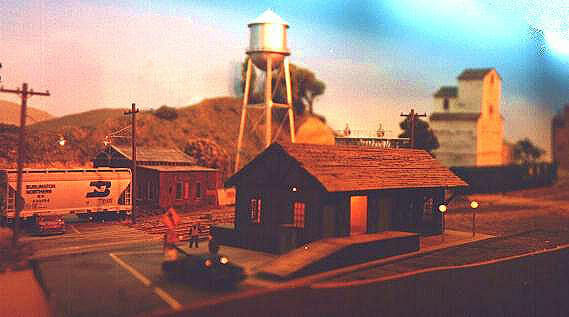
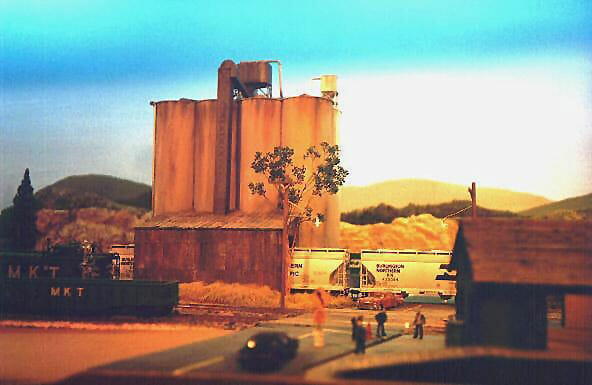
To date, I have mostly sheltered readers from the geekiest of my hobbies: model railroading  (Yeah, I know what you are saying -- how can anyone who spends hours a day at a computer writing on arcane bits of business and economics issues possibly be anything but cool?)  This may soon change, as I am starting a new N-scale layout and I will probably inflict some in-progress photos on you folks.  To get an idea just how crazy I am, I build my own track from wood strips and bundles of rail and tiny, tiny spikes -- so we are not just talking about putting the old Lionel out on a green table cloth.

Anyway, for some time I have wanted to build a layout that is primarily meant to be run in the dark as a night scene.  So I am experimenting with a lot of technologies, from florescent paint to tiny LED's to small bulbs to get ideas for various scenes.  The EL wire turns out to be a dead ringer for scaled down neon, so I expect to use a lot in the city part of the layout.

I will leave you with a photo of the layout that probably inspired more people (including myself) into the hobby than any other  -  by the master, John Allen:

s1_020_b4squaw_sep64

If you get intrigued with his work, more photos are here.

I wish I had more pictures of my old work, but they seem to have been lost in a move.  All I have left is a few poor-quality, poorly-scanned under-construction photos of my first layout from years and years ago.

rr3

rr1

Postscript: Can a hobby be geeky if Rod Stewart shares it?  He has built an absolutely stunning layout - one photo below and more herestewart-layout

And yes, the work really is his own, he didn't just pay someone to build it for him.

Explain the Correlation...

I am confused as to why a preference for overpriced organic foods and a preference for government monopoly control of health care are necessarily correlated at the 1.0 level.  But apparently they are.  Maybe its a common desire to overpay for basic necessities?

Art Book Omits Any Pictures of Art

The producers of a book about a series of famous works of art decided unanimously that it was unnecessary to include any pictures of the works of art being discussed.

[The pictures are] freely available on the Internet and can be accurately described in words, Mr. Donatich said, so reprinting them could be interpreted easily as gratuitous.

Can you imagine this being said about a book on, say, Seurat?  Could you describe in words adequately the visual impact of Pissaro, or how it differed from Monet?  No?  Pictures are a visual medium - I would argue that they are failures if they can be adequately and completely described in words alone.

Of course, the quote above is not about an art book, it is a book from Yale University Press about the group of the 12 Mohamed cartoons drawn by that Danish cartoonist.  Someone (actually an entire publishing staff) actually thinks it is a good idea to write an entire book about a set of visual media without reproducing the visual media in the book.  Incredible

Ironically, the cartoons are freely available on the Internet ONLY because some Internet site proprietors have more intestinal fortitude than Yale.  If everyone took the same stance as Yale, they would not be freely available.  And since most of the major media made the same editorial choice not to publish the cartoons at the time of the controversy, the likelihood that a reader has not actually seen the pictures is much higher than, say, for a Seurat book.  In this sense, Yale had a greater, not a lesser, obligation to publish the cartoons in the book.

Besides, to see the cartoons is to say, "WTF is all the fuss about."  I mean they are bland, bland, bland by the scale of either American or European political cartooning.

mohammedcartoons

Seriously, the only reasons someone would want to not publish these cartoons is to help hide just what an astounding over-reaction it was to make much of a fuss over them in the first place.  Seriously, these things are the Emperor's new clothes, except that  a few folks calling them out for being naked still haven't stopped a majority of the intelligentsia from continuing to pretend.

This is also ironic given the really, really low bar Yale has set for art in the past.

We Actually Have A Control Group

It is going to be a really, really, really long four or eight years if the Obama Administration and much of the left insists on declaring that anyone who dares to criticize a black President in racist.  The most recent example, of course, are frequent charges that critics of the health care reform are motivated by racism.

It is already clear that this Administration intends to raise the unverifiable claim to a new state of the art (3 million jobs saved or created!)  But the interesting thing about the health care - racism link is that in this particular case, we actually have a really good control group -- the first term of the Clinton administration.

In 1993, the Clinton administration embarked on a double secret effort to redesign the health care industry under government authority.  As details of the plan leaked out, many folks went nuts.  Commercials aired in key districts attacking various portions of the proposals and raising fears all around.  People were so ticked off that in the 1994 mid-term electi0ns, Democrats lost control of Congress for the first time in many decades, an election trouncing generally credited first and foremost to health care proposals.

Its not like the Obama administration is unaware of this example.  Many if Obama's approaches to the health care legislation this year are intentional changes from Clinton's approach.  Obama's rush to pass legislation that does not really start getting implemented until 2013 by the August 2009 recess was clearly an attempt to prevent opponents from gearing up campaigns against the bill as they did with Clinton's.

But here is the really interesting part.  I could have this wrong, but I could swear Clinton is a member of the White Anglo-Saxon Protestant oppressor race.  If so, the implication is that people went bonkers in 1993-1994 over health care plans for some political reason, but people who go bonkers  in 2009 over many of the same plan points are racist?  Does this pass any kind of smell test?

What is really going on is that a bunch of people who have never held a productive job, being politicians for life, and who have bought into their own "dedicated public servant" marketing are suddenly shocked to find that they and their efforts are not universally appreciated.  When someone has the bubble burst on their manufactured self-image, their reaction is seldom pretty.

Regulation and Choice

If you want to really confuse someone, restate the minimum wage laws this way:

It is generally illegal in the US to accept a job for less than $7.25 an hour.  The minimum wage laws are therefore a substantial constraint on individual liberties

When I say this to most folks, they get confused because laws like minimum wages are usually stated in terms of empowerment of the common man.  The theory is that individuals don't have enough bargaining power to really get what the true clearing price should be for their labor, so the government steps in to prevent evil corporations (ie "the man") from exploiting this power imbalance and paying wages that are too low.

Tell that to my 15-year-old son who is looking for a job.  Sure, he would like to earn some good cash, but the wage scale of a job is way down the list of priorities.  What he really needs is a chance to build basic work skills and knowledge of how organizations function that you and I take for granted.  Further, he would like to get some direct experience with customer contact.  And finally, he wants to demonstrate to future college choices that he can function successfully in a work environment, and that he is motivated enough to keep and hold a job.

As a result, my son would likely gladly take the right job for, say, $3 an hour.  And an employer might jump at this deal, understanding the lower wage helps compensate for the costs of dealing with an inexperienced new employee and the risk of hiring a teenaged boy with distracting amounts of hormones running through his system.  This would be a perfectly rational, consensual, everybody-wins arrangement that is absolutely illegal.  So don't tell me or my family that minimum wage laws are empowering.

The health care analog

Many very similar liberty-reducing regulations exist in the health care world, and more appear to be on the way.  One great example that is entirely similar to the minimum wage issue is minimum coverage rules.  Many states have lengthy lists of conditions that must be covered in any health insurance plan sold in that state.  From acupuncture to mental health to massages to homeopathic treatments, you can find just about every care specialty with a lobbying organization getting its services embodied in state laws as minimum requirements.

Again, supporters of such laws argue that this is empowering for consumers.  Every health care plan you can buy will have a wide array of covered services.  But, they will also all be expensive.  What if I don't want mental health coverage or acupuncture?  Why do I have to pay extra for this stuff to be covered by my policy?  I go to the doctor very, very infrequently - basically only if the condition is critical - so why is it illegal to purchase a health insurance plan that matches my health care use preferences?

Currently I pay for my own health care plan and have insurance that I consider true insurance.  It has a high deductible, and does not cover a bunch of non-critical stuff.  I have no dental coverage, and pay dental all out of pocket, as I do most routine medical expenses   I have medical insurance solely to cover catastrophic medical events that would likely be financially disastrous for me  (I do the same thing with my house and car, paying for routine maintenance with insurance reserved for catastrophes).   Fortunately, Arizona allows me to buy such a policy, though it does have minimum coverage rules that make the policy more expensive than it might be.  In other states, like Massachusetts, my health plan with a high deductible is illegal.  It would also be illegal under the current House and Senate versions of Obamacare.

Medical Insurance and Windshields

I do a lot of back road and highway driving, so windshield repair and replacement are things I deal with fairly frequently.  I've generally always just paid for these repairs out of pocket.   It is a field where if one shops around, there are a lot of good deals.  However, for a while I lived in a state that had a law that said all auto insurance must have windshield replacement coverage.

The effect on my behavior was dramatic.  When living there, I didn't even think about shopping around for a windshield repair.  I just had the dealer do it (surely the high cost supplier) when I had the car in for regular service.  I didn't care what the cost was, it was covered in my policy.  (Ironically, it turns out in retrospect that I should have shopped around -- because no one else in the sate cared about cost, all the windshield suppliers jacked up their prices and then competed by offering kickbacks in various forms to consumers, basically competing on how much of the insurance money they would share with the car owner.  Truly dysfunctional).

I have seen the exact same change in my behavior, but in reverse, in switching to a high deductible medical policy.  Until about 3 years ago, like most Americans, we never even thought about the cost of our medical care.  We weren't paying for it.  But now, as I pay most of our routine expenses, I am amazed at the difference.  When my son needed a CT scan, three phone calls gave us a huge variation in quoted prices.  It turns out, shopping works, even in medical care.

Postscript: I have always wondered why insurance companies didn't create some incentive for shopping.  If I were running such a company, I would be tempted to tell customers - "our reimbursement rate for CT scans in your area is X.  If you get it done for less than X, we will split the savings with you 50/50."  Though I suppose the danger is tht this could morph into a variation of the windshield kickback system.

Watch Out - Your Industry May Be Gutted Like A Trout Next

I have written before about the  demagoguing going on about "health insurance profits" and just how BS those charges are.  Here is Obama yet again:

"There have been reports just over the last couple of days of insurance companies making record profits, right now," Obama said during a prime-time news conference. "At a time when everybody's getting hammered, they're making record profits, and premiums are going up. What's the constraint on that? ... Well, part of the way is to make sure that there's some competition out there."

This follows Pelosi saying:

I'm very pleased that our Chair of our Democratic Congressional Campaign Committee and member of the leadership will be talking too about the immoral profits being made by the insurance industry and how those profits have increased in the Bush years. We all believe in the profit motive; we all want to reward success.  But having that success come at the expense of America's working families "” have that success come by withholding care, when a person becomes ill, is just not right and we're going to take this issue in a new direction.

And pundits saying even crazier stuff, including Kevin Drum (who is actually one of the saner members of the left) writing:

It means the health insurance industry is scared that we might actually do something in 2009 and they want to be seen as something other than completely obstructionist. That means only one thing: they've shown fear, and now it's time to bore in for the kill and gut them like trouts. Let's get to it.

Rick Perry links to several posts debunking this claim, and shows a profit margin consistent with what I have found in my research -- about 3.3% of revenues, which my posts (linked above) showed has fallen over the last several years.  This profitability level ranks 86th(!) on the list of American industries, behind such rapacious industries as auto parts wholesalers and confectioners (see table in his post).  Look out everyone, if this industry is too profitable for this administration, then just about every industry in the country is too profitable.  Heck, this margin is even worse than mine, and I operate in an industry universally described as having "thin margins."

What do you call a man who thinks a 3.3% profit margin is too high?  How about "Marxist."

Update: My guess is that there is some health insurer who due to a merger grew larger and therefore made a higher profit in absolute dollar terms, so my guess is that Obama is not flat out lying.  But he is freaking close, given that he credits such profits to fee increases and denying services rather than business growth.  Profitability should be judged on margins, not total dollars (even better, it really should be judged on return on equity or return on assets employed, but that is rocket science to the economic monkeys wielding bone tools we have in the media).

Cash for Clunkers: $416 Per Ton of CO2 Reduction

Christopher R. Knittel of UC Davis has  a paper (pdf)  looking at likely CO2 reductions from cash-for-clunkers under a variety of assumptions.  The $416 figure per ton of CO2 avoided may actually be low, as it does not include the well-documented rebound effect of people with higher MPG cars driving more miles**.  Also, he admittedly assumes that cars being turned in will have average future driving miles for a car of similar age, though there is anecdotal evidence that in fact the cars being turned in are driven less than average.   Under these assumptions, the cost may be as high as $600-$1000 per ton.

The analysis looks pretty thoughtful, with the proviso (which the author is the first to make) that data on the program and cars bought/turned-in is still sketchy.  The interesting part was that there were no reasonable assumptions that even got the price within an order of magnitude of the $28 per ton clearing price the CBO estimates under cap-and-trade.

As a CO2 reduction program, this is the equivalent of the military's $700 toilet seats.  But of course we all know that no one ever really considered this an environmental or even stimulus bill.   This was always first and foremost 1) another Easter egg subsidy for the middle class and 2) a back door way to subsidize GM and Chrysler to try to make the Administration's investment in them look better.

** This is straight supply and demand -- reduce the cost of miles driven, and people will drive more miles.

More Liquor License Woes

Apparently after 20 months of effort, I am within spitting distance of getting one of two liquor licenses I am applying for in Ventura County, California (the other had to be completely restarted due to some paperwork mistakes).

I had to just laugh at the last remaining hurdle.  A part of the licensing process is to post a public notice at the site.  The ABC called me and said they are holding my application until they get my affidavit of posting -- this is a one page form with my signature stating on what date the facility was posted.

But here is the funny part -- the ABC representative who is calling me actually posted the site herself.  She visited the facility as part of a mandated inspection and then posted the site.  The only way I knew what date the site was posted was by asking her.  So ABC is requiring that I submit a form to tell them what day they themselves posted the site, a date I had to get from them before I could put it on the form to send back to them.

Coming soon:  The Affidavit of Elevated Body Temperature and/or Vomiting that must be submitted before obtaining a doctor's appointment.

I Wondered Why They Weren't Pounding the US

Usually an article like this would blame the US:

Global carbon dioxide emissions in 2008 rose 1.94 percent year-on-year to 31.5 billion tonnes, German renewable energy industry institute IWR said on Monday, based on official information and its own research.

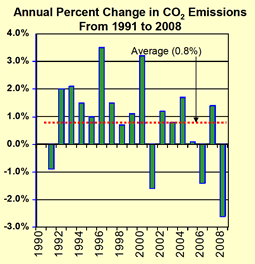
Several other leftish / alarmist sites picked up the story, but still didn't hammer the US, saying only that the US is the largest contributor to total emissions but not whether it contributed significantly to last year's rise.  It turns out there is a reason for this.  US emissions were actually way down, falling far faster than the drop in economic growth:  (from the EIA)

slide01

The story tries to put a positive spin on Europe  (again, the preferred story line is always Europe-good-America-bad):

Carbon dioxide emissions from heavy industry participating in the European Union's Emissions Trading Scheme fell 3.1 percent last year compared with 2007, the EU's executive Commission said in mid-May

This is a carefully worded cherry-picking on one sector of the economy.  I would be willing to bet almost any amount of money that the rest of Europe's economy saw less of a drop or even an increase.  Even so, the cherry-picked sector, the one subject to cap-and-trade, still underperformed the US.  Overall, US emissions have fallen since 2000 without any real regulatory program and just the normal incentives of economic efficiency at work.

The US is NOT the problem when it comes to future emissions growth.

230 MPG?

Update:  230 MPG turns out to be, as I suspected, total BS.  Make sure to check out update at bottom

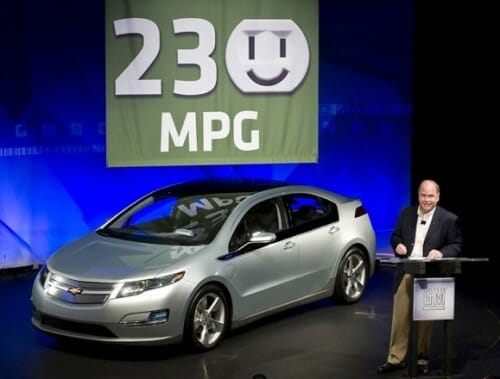
Apparently under new methodology, the Chevy Volt got an MPG rating of 230.

we're told that the Volt has snagged a staggering 230 MPG rating in the city, but we should caution you that it's not as cut and dry as GM would have you believe. The EPA has released "a new methodology for determining a draft fuel economy standard for extended-range EVs like the Volt," and it's that murky measurement system that has blessed Chevy's wonder child with a triple digit MPG rating.

230-mpg-chevy-volt

Forget for the fact that the whole terminology is meaningless, as the vehicle only burns liquid fuel for a portion of its energy needs, so "miles per gallon" is an odd concept.  But one could imagine that one could look at the miles per electrical charge, and then look at the equivalent gallons of gasoline-equivalent BTU's it took to deliver that electricity, and create an equivalent MPG.  In fact, that's the only approach that makes any sense to me.

If so, these numbers imply that it is 10x more efficient to burn hydrocarbons in a large utility plant boiler or gas turbine, convert the combustion energy to electricity, transmit that electricity hundreds of miles, charge up a set of car batteries, and then drive an electric traction motor from the batteries than it is to burn hydrocarbons directly in an internal combustion engine in the vehicle.

If this is really the case, then I have been selling electric cars short and we will all soon be buying them (I prefer the performance of an electric engine so this kind of fuel savings is just icing on the cake).  However, I have my doubts.  While certainly a large power station is much more efficient in using all the BTU's in a fuel than is an internal combustion engine, when one considers losses in the electrical generation and line losses, I find it very very hard to believe the difference is 10x.

But I am sure there is no conflict of interest here, and that it is pure coincidence that GM is owned by the same people who created the new methodology and did the testing, and given that the new methodology was created by the same people who have been pushing electric cars as a policy alternative.

Update: The 230 MPG figure is even more BS than I thought.  Apparently, MPG while running on batteries is treated as infinite!  In other words, electricity is treated as "free" and not costing anthing in terms of fuel. Check out how the math is done

When gasoline is providing the power, the Volt might get as much as 50 mpg.

But that mpg figure would not take into account that the car has already gone 40 miles with no gas at all.

So let's say the car is driven 50 miles in a day. For the first 40 miles, no gas is used and during the last 10 miles, 0.2 gallons are used. That's the equivalent of 250 miles per gallon. But, if the driver continues on to 80 miles, total fuel economy would drop to about 100 mpg. And if the driver goes 300 miles, the fuel economy would be a just 62.5 mpg.

This is entirely consistent with the bizarre way electric cars have always been treated by environmentalists and politicians, as if the electricity is free and they have no  hydrocarbon use or CO2 production.  Which is weird, since we get harangued for our incandescent light bulbs destroying the world when we plug them in but plugging in a whole car does not?

That being said, if one really wanted to move away from hydrocarbon fuels, the smart approach is probably to go with electric cars and then attack electricity generation rather than transportation.  I will feel good plugging in my car because the juice will come from a big honking zero-emissions nuclear plant.

From Nobel Laureate to Political Hack

From the AZ Republic, Paul Krugman is claiming that the administration's stimulus spending, which I don't think has even reached $100 billion of the programmed $1 trillion, has officially averted another Great Depression:

Aggressive stimulus spending by governments helped the world avoid a second Great Depression

but full economic recovery will take two years or more, Nobel Prize-winning economist Paul Krugman said Monday....

"We have managed to avoid a second Great Depression ... but full recovery is at least two years and probably more," Krugman said.

This is just a pure joke.  First, the total additional spending was tiny compared to the size of the world economy.  Second, almost none of the stimulus money has actually been spent -- even the article goes on to say that "Most of the money will flow in 2010."  So is Krugman arguing that just the notion of stimulus spending, without the actual spending, has saved us?  Third, most of the early projects were typically stupid, whatever governments could ram through their procurement processes in a short period of time.   I challenge even the most ardent Keynsian to argue this stimulus was truly structured to target underutilized resources, or whatever their theory is.  I would love to see Krugman stand up in front of a doctoral committee and justify this wild-assed supposition with actual facts and analysis.

But the even more incredible unproven (and in fact entirely non-verifiable) part of the statement was that we were even headed for a second Great Depression anyway.  Many of us from the sidelines said that this looked like a recession similar in magnitude to that of the early 1980's, and in fact that appears to be exactly what we got.  The whole "second Great Depression" meme is merely a giant straw man used first to stampeded ill-conceived spending legislation through Congress with little scrutiny and now to provide a fake alternative against which Obama and company can declare victory.   Krugman is so far in the tank, its impossible for me to even think of him as an economist any more.  The Nobel Laureate who now retails non-verifiable claims.

The fact is that this was a normal recession blown out of proportion first by the Bush and later by the Obama administration.  From the very beginning, it looked much like the recession of the early 1980's or the bank crisis of the early 1990's, and it recovered for the same reason - there are fundamental strengths in the economy.  In fact, the length of the Great Depression was in fact the aberration, caused more by FDR's wild proposals (the worst of which was the National Industrial Recovery Act) which tended to dampen the investment that normally picks up at the bottom of the cycle to take advantage of reduced asset values and input costs.

Other Assertions by Krugman

Interestingly, economist Krugman appears to think that the problem with the financial system is that people can make money in it.  Really?  Gosh, I thought people just invested billions of dollars for the warm feeling it gives them:

He said there was a need to restructure the global financial system and impose tighter regulations to avoid a repeat of the economic crisis, but expressed concern that the momentum for reforms appeared to be easing.

"We do not have the political will to do that just yet ... I suspect clever people can still make a lot of money from the financial system in the next few years," he warned.

I also thought this was funny, in the context of the recent financial mess.  He says:

"Over-reliance on self-regulation is a mistake," he said. "Global regulators should err on the side of investor protection and financial stability rather than rely on a 'buyer beware' regulatory regime."

I must say it is surprising to see Krugman saying this.    Let's think about mortgages, the primary driver of the recent financial difficulties.  In mortgages, the investor is the bank making the loan.  So is Krugman advocating for more protection of mortgage lenders and their insurers like AIG against home buyers who take their money and then don't pay them back?

Update: Oh, and TARP never bought any troubled assets, just was used to bail out a few selected politically connected companies.

66,667% Contingency Fee

Via Overlawyered:

The settlement discussed in this space July 17 "” in which lawyers nabbed more than $25 million in fees and expenses, while fewer than 100 consumers redeemed Ford coupons worth $37,500 "” was covered by the Associated Press last week, which stirred outrage in many quarters [Krauss/PoL, Greenfield, Cal Biz Lit]. As Cal Civil Justice notes, the settlement was purportedly on behalf of owners who suffered no rollover or other mishap. Instead, it sought damages for losses in the vehicle's resale value due to adverse publicity, a nicely circular theory, since the adverse publicity was in good measure propelled by various allies of the plaintiff's bar.

Shame On Executives For Flying Private Jets...

...only those of us in Congress get to fly private jets

Congress plans to spend $550 million to buy eight jets, a substantial upgrade to the fleet used by federal officials at a time when lawmakers have criticized the use of corporate jets by companies receiving taxpayer funds.

The purchases will help accommodate growing travel demand by congressional officials. The planes augment a fleet of about two dozen passenger jets maintained by the Air Force for lawmakers, administration officials and military chiefs to fly on government trips in the U.S. and abroad.

The congressional shopping list goes beyond what the Air Force had initially requested as part of its annual appropriations. The Pentagon sought to buy one Gulfstream V and one business-class equivalent of a Boeing 737 to replace aging planes. The Defense Department also asked to buy two additional 737s that were being leased.

Lawmakers in the House last week added funds to buy those planes, and plus funds to buy an additional two 737s and two Gulfstream V planes. The purchases must still be approved by the Senate. The Air Force version of the Gulfstream V each costs $66 million, according to the Department of Defense, and the 737s cost about $70 million.

Even the richest of private companies blush at the prospect of buying Gulfstream V jets, the absolute top of the line in business jet luxury.  Except, of course, for the ridiculously oversized Boeing Business Jet, of which Congress appears to be buying 3 (the BBJ is the business version of the 737).  I am sure there is one, but I can't think of a single Fortune 500 company, and I have worked for and with a lot of them and flown on their jets, that has even one BBJ.

I can understand why certain officials need to fly private planes just for security, but the average Congressman from Wyoming?  Why won't commercial work.  Andy why, if they must have  a private plane, wouldn't a more reasonably sized Falcon 50 or Citation work just as well?

Update: Several people have found it ironic that the White House threw a fit over $300+ million for funding of new warplanes but hasn't blinked over $500+ million to ferry Congress around in luxury.

Update #2: An example of the BBJ.  This is how you fly, right?

boeing_bbj_int1_lg

Our Opposition Party Sucks

Doesn't anyone speak for sanity any more?

Washington runs on political leverage, and at the current moment few people have more of it than Chuck Grassley. President Obama is desperate to have the Iowa Republican sign on to some version of ObamaCare to give cover to jittery Democrats. So in a remarkable noncoincidence, the Obama Administration decided to roll over last week on one of Mr. Grassley's major concerns: ethanol.

OK, we will give in to your ridiculous use of government power if you will accept our ridiculous use of government power.   Lots more on the complete waste of money and time that is corn-based ethanol here.

Cost of Insurance "Reform"

To some extent, there are signs Obama may be willing to walk back health care "reform" to just insurance "reform," though the two are highly related.  As a minimum, insurance "reform" is likely to include rules that no one can be denied coverage, community rating, and minimum covered service requirements.

These are really, really expensive.  Megan McArdle on the NY experience:

John Cole takes me to task for not knowing that health insurance premia have tripled in New York State.  Indeed, he's right--I should have checked.

But this is not the "gotcha" the left believes.  I erred so low because I was trying to be charitable to the cause of national health care.  You see, the reason that insurance premia are so high in New York State is that New York State enjoys community rating, guaranteed issue, and a very generous bevy of mandatory services.  The result is that the cost of insurance is very, very high.  What I failed to realize was just how radically out of line New York's rules had pushed its health care costs.  The average premium across the United States has increased about 25% since 2004.  In New York, the rate of inflation has apparently been about 16 times that.  I wasn't "aware" that insurance premiums have doubled and tripled over the last seven years, because for the country as a whole, this isn't true.

McArdle is sometimes irritating in bending over backwards to be fair to folks whose views don't deserve such charity and who would not ever extend the same favor back at her.  So it is kind of fun to see her going a bit postal over the last few days.

Paging Frédéric Bastiat

The US Forest Service is using a million dollars of its stimulus money to ... fix broken windows! How appropriate.  But these are not any broken windows -- these are energy inefficient windows for a visitor center that was closed two years ago and for which no budget exists now or in the future to reopen.   Beyond the nuttiness of building a multi-million dollar visitor center, then closing it only a few years after it was built, and then spending a million dollars on its abandoned carcass, no one was available to explain how energy efficient windows will save money in a building that shouldn't be using any energy any more.  Remember, for this spending to truly be stimulative, the money has to be spent more productively than it would have been in whatever private hands it was in before the government took it.

But even forget the stimulus question and just consider the issue of resource allocation.   I work on or near US Forest Service lands in many parts of the country, and know that their infrastructure is falling apart.  Congress loves to appropriate money for new facilities (like shiny new visitor centers), but never wants to appropriate money for capital maintenance and replacements of existing facilities.  So there are plenty of needs for an injection of $274 million in capital improvement money.  And I know that the USFS has had teams of people working for 6 months on their highest priorities.  And after all that work, they allocated  almost a half percent of their funds on upgrading windows in an abandoned building?

Postscript: I have vowed not to write about the US Forest Service because I interact with them so much and such interactions would not be improved by my dissing on them online [I am in the business of privitizing the mangement of public recreation and am constantly working to convince the USFS and other recreation providers to entrust more to private companies.  One thing many people don't know -- the USFS is by far the largest public recreation provider in the world, far larger than the National Park Service or the largest state park systems].  However, I feel on safe ground here, as I think virtually every frontline USFS employee I know would agree with this post and be equally angry.  In recreation at least, this is an organization that begs and pleads to get a few table scraps left over after the National Park Service is done eating, and it is crazy that they spend the few scraps they get this poorly.

Reading the Health Care Bill

Here are some notes on the health care bill from one person who plowed all the way through it.  Some of the interpretations are a bit over the top, but I find it a useful index to help me find relevent sections I want to read in more detail.

Cooking the Books on Cash for Clunkers

From CNN via NRO:

NEW YORK (CNNMoney.com) "” What are people trading their clunkers in for? It depends on who you ask.

The government's results showed small cars as the top choice for shoppers looking for Cash for Clunker deals. But an independent analysis by Edmunds.com disputed those results, and showed that two full-size trucks and a small crossover SUV were actually among the top-ten buys.

The discrepancy is a result of the methods used. Edmunds.com uses traditional sales measurements, tallying sales by make and model. The government uses a more arcane measurement method that subdivides models according to engine and transmission types, counting them as separate models.

For example, the Ford Escape is available in six different versions including two- and four-wheel drive and hybrid versions. The government counts each version as a different vehicle using guidelines from the Environmental Protection Agency. Only the front wheel drive, non-hybrid version made the government's top ten list.

The Ford Escape crossover SUV, instead of being the seventh-most popular vehicle under the program, as the government ranked it, was actually the best seller, according to Edmunds.com. The government pegged the Ford Focus as the top seller.

Trucks tend to be available in more variations than cars. That's because truck buyers have a wider variety of needs than car buyers, General Motors spokesman Brian Goebel said.

"There's just so many different uses for the truck, both retail and commercial, than with car purchasers," he said.

The Edmunds rankings, shown in the NRO link above, actually solve one problem for the Obama administration but create another.  The Edmunds list has far fewer foreign cars, overcoming the criticism the program has gotten (not from me!) for promoting sales of non-American nameplates.  But it creates another problem, in that most of the cars on the Edmunds list are relatively low MPG, obviating the whole point of the program.

Our Post Racial Society

I have never gotten as bent out of shape by reverse discrimination charges as have many Conservatives.  If private organizations, for whatever reasons, choose to relax standards to let certain groups into their businesses or universities in larger numbers, so be it.  I find it outrageous that this is considered "progressive" when done in favor of certain races, and "racist and evil" when done entirely symmetrically in favor other other races, but I am still all in favor of letting private organizations set their own admissions or hiring standards.  Public organizations, of course, are held to a different standard, and my reading of "equal protection" has always been that standards really should not vary across races.

That being said, I found this amazing.  For the reasons stated above, I am not ready to get up in arms about it, but I do think the extent of the asymmetry in standards is much greater than most people would guess.

How You Know You Are Winning An Argument

One thing I have learned from a number of years of being a vocal climate skeptic on the web:  When group A makes an argument, and group B responds only with ad hominem attacks on motivations and funding sources, then group A is winning.  It may not seem that way in the media, mainly because the media has gotten to the point where they accept ad hominem attacks as valid rebuttals to scientific or policy arguments.

Remember that charges of faulty motivations, being funded by evil scheming organizations, or even of racism are effectively admissions of weakness.  People who make such arguments are basically admitting that they cannot argue the issue on its merits, and so must resort to tarring the other side so that they can say the people raising the issue don't deserve a response.

My Definition of Sustainability

I was going to respond to this goofy post on sustainability, but it would just be wasted time for this audience.  I think most of you can spot the errors and non sequiturs.  The heart of the problem is that the folks discussing "sustainability" have far more faith in the goodwill of people who deal with them through force (ie the government) than the folks who deal with them only via mutual consent (e.g. private enterprises).

I have never understood this attitude -- sure, the private guy on the other side of my transaction may be ridiculously wealthy, but he got that way only by being able to provide a service people are willing to buy of their own free will at a price that actually covers his costs**.  No one ever volunteers to consume government services unless they are 1) forced to do so (as in public schools or a government supported monopoly) or 2) the service is heavily subsidized (meaning it doesn't not cover its costs).

Which led me to my definition of sustainability, which I think is particularly important in this time of absurdly skyrocketing government spending.  Sustainability in my world means being able to supply a product or service that people are willing to buy of their own free will for the price I specify or that we negotiate, without any sort of coercion.  And that this price charged covers not only my costs, but covers the capital costs of continuing to improve my offering in order to fend off potential competitors.  And that this price further yields me a profit which pays me for my effort and gives me the incentive to keep providing this product or service.

In a free society, the ultimate measure of sustainability is profits.   Profits are what make the division of labor possible, which in turn is the only approach we have ever found to living above a subsistence level.  Without profits, activity beyond subsistence only occurs through coercion at the point of a gun.  If an activity does not yield us surplus, does not reward us for our time spent, then we only pursue it if our rulers use force to make us do so.

iPods and Dell computers and Big Macs are sustainable.  Government health care and cash for clunkers and the Post Office and Amtrak and about everything run by the State of California are not -- except when the government uses its power of force to grab the money it needs to close their budget gap or restrict individual choices or both.   The Post Office is a great example -- the government uses force to take money via taxes from citizens to cover its operating losses, which the Post Office incurs even though the US has used force to prevent anyone from competing with its first class mail business (particularly the most profitable segment, intracity mail).  And still, I might add, the Post Office is going bankrupt.

Look at Exxon vs. Amtrak.  One runs for profit, and in fact gets excoriated for its profits, while the other is run by the government and is lauded for its beneficence.  Which has proven the most sustainable?

And private enterprise has checks on their behavior that don't exist for monopoly government offerings.  When private businesses screw up, or become senescent, or even corrupt, and fail to cover their costs, they are supposed to go bankrupt.  For all the public handwringing about Enron being a bad example for capitalism, it was in fact a victory for capitalism  --  an unsound, possibly corrupt, business died.  Unsustainable business models, whether they be banks making nothing down mortgages or car companies producing bad cars, fail -- in fact, they are supposed to fail -- and resources are diverted to sustainable companies and businesses.  Except when .... you guessed it .... the government intervenes to prevent this from happening by bailing out bankers and manufacturers alike because those companies are owned by or employ people who helped get the president elected.

This renewal never happens in government.  We still have Amtrak, despite nearly 40 years of losses.  We still struggle with the post office and the DMV.  Heck, we still have state alcohol boards fingerprinting bar owners and running FBI checks on them to make sure we are not Al Capone, a problem that went away with the end of prohibition 3 generations ago.

Postscript: A part of the linked post is also a plea by two progressives for more protectionism.   Clearly, these two folks don't agree with the majority economic opinion that protectionism is bad for all nations.  But let's accept their premise for a moment.  Let's assume, as they do, that trade is a mercantilist zero sum and that protectionism would net boost our economy.   They are essentially advocating that the US, the wealthiest country on Earth, protect its workers to the detriment of poorer workers around the world.  Is this really the progressive position?

Postscript #2: A good question I have been using for people lately who show great confidence in the government's ability to solve problems through coercion:  "Imagine what powers you want to give the government.  Now, imagine your political opponents in the _____ Party wielding those powers.  Are you still happy?  If not, what are you counting on?  Point to the period in history where the same party held the presidency for 30 or forty years straight."  This question works well because almost everyone who favors giving coercive power to the government imagines only themselves or their allies wielding this power.

** Footnote: OK, the guy in private enterprise may also have gotten rich from rent-seeking and government favoritism,  but is that a failure of free enterprise or government?    I would normally have said this was a rhetorical question -- clearly, to me at least, rent seeking is the result of a system that gives government employees power over individual decisions.  In a country of strong personal liberties and limited government,  rent-seeking is much much harder.  But my liberal mother-in-law is totally convinced that rent-seeking is not the fault either of the structure of the government or the individual occupants of government but totally the fault of private businesses, and that only more regulation will stop it.

Regulation Is Almost Always Anti-Competitive

Continuing with a long-running theme here at Coyote Blog, here is another example of government regulation being anti-competitive and having the net result of protecting the margins of powerful, established incumbents against new entrants:

During a recent meeting, the Antiplanner was extolling the virtues of Houston's land-use policies, and a home builder at the meeting said, "Of course, no one here wants our city to be like Houston," meaning no one wanted Houston's land-use regime.

Why not? I asked. "There is too much competition down there. My company can't make a profit," he said. "You have to have some barriers to entry to be able to make money."

Those who accuse free marketeers of being supporters of big business don't realize that big businesses (and often smaller businesses) don't want a free market. In this home builder's case, he wanted enough restrictions on the market to keep out some of his competitors (most likely smaller companies that can't afford to hire lawyers and planners for every project) but not enough regulation to keep his company out

Several years ago my company had to obtain a liquor license in Shasta Country, CA. At one point, the issuance of the license had to be voted on by some group (County commissioners, the planning board, something like that). I was told the reason was that if they issued too many licenses, I would not be able to make money -- really, they were looking after me.

Well, not really.  First, the government seldom has any idea even how a business works.  Perhaps the liquor was a loss leader for my business, and I didn't care to make money on it at all.  Perhaps I had a better marketing concept.

And herein we get to the real flaw -- the implication is that somehow the dangers is to the new entrant in a crowded marketplace, but in fact the reality is often the opposite.   The actual competitive danger is often to incumbents, fat and happy with the status quo and unable to react quickly (due to all kinds of reasons from sunk investment to long held biases) to shifts in customer preferences.  No matter what their stated reason, the true effect of such regulation is to protect current competitors from new entrants, new products, and new business concepts.

I can see the effects of this right here where I am sitting, out near the end of Cape Cod.  Zoning and business regulation here is enormously aggressive - its is virtually impossible to start a new retail establishment here, particularly on virgin land.  As a result, every store and restaurant here feels like it is right out of the 1950s.  You'd hardly know there has been a revolution in retail or service delivery over the past few decades, because businesses here are sheltered from new entrants.  They don't need to adopt better practices or provide better products or services, because they know they are not vulnerable (courtesy of the government) to competitive attacks from new entrants using more modern strategies.

Clunker Rent Seeking

I thought this was pretty illuminating, from Tim Carney via Hit and Run.  He is writing about lobbying efforts for and against an extension of cash for clunkers:

One lobbyist for this bill was Nucor Steel. In Cayuga County, N.Y., Nucor turns scrap steel into sheet metal and other steel products. The clunkers are now becoming a subsidized feedstock for Nucor, which helps explain why Sen. Chuck Schumer, D-N.Y., has led the push for $2 billion extra in clunker cash.

Then there's Enterprise Rent-a-Car also backing the bill, supposedly out of solidarity with automakers. But Enterprise sells its rental cars after a few years. As a rental firm that buys its cars new, Enterprise benefits every time someone else scraps a used car.

On the other side of the lobbying debate were non-dealer auto-repair shops, whose businesses depend on used or older cars, which the owners don't take to the dealer for repair. Also, the Automotive Aftermarket Industry Association opposed the bill.

These are the guys who can sell you the headlight for your 1998 Ford Taurus, or who rebuild an engine out of a junked car.

Shredding old cars saps both their clientele and their supply of old transmissions to rebuild.

My Favorite Quote of the Day

From a Chicago Tribune editorial on the city aldermen blocking Wal-Mart construction in the city, via Carpe Diem:

Organized labor doesn't like Wal-Mart because Wal-Mart doesn't have union jobs. It just has jobs (with an average hourly wage of $12.05 in Chicago). The aldermen, of course, already have jobs. They get paid $110,556 a year and they figure that as long as they keep the labor unions off their backs, they'll keep making $110,556 a year.

Who says the City Council doesn't generate jobs? If you're one of the 50 aldermen, your unemployment rate is 0 percent. But the unemployment rate for the rest of Chicago is above 10 percent. One in 10 Chicagoans is out of work.