Prices Matter
The other day I was having a discussion with a smart, well-informed woman who tends to be a bell-weather for Democratic talking points. When asked about the recession, I said something like this:
The story for banks, corporations, and people are all the same -- everyone has too much debt, everyone took on too much in expectation of things going up and up. With flat or even down expectations, everyone is now trying to clean up their balance sheet. They are spending less, building equity and reducing debt. And the economy is going to slow as a result, no way around it. I went on to say that I was not only opposed to the stimulus bill in particular, but I was offended that the government would try to interrupt this deleveraging process. The government had essentially made the decision that if individuals won't spend, then the government will take their money in the form of taxes and spend for them. And if no one wanted to have debt, the government would go about and take debt on in the name of everyone.
She responded that she thought it was ironic that after the government had worked so hard for so many years to tell people to save more, and that they are only doing it now when it was counter-productive.
Forget for now the whole Keynsian "saving is counter-productive" argument, and focus for a minute on the government communication effort around individual debt. There is no doubt that to the extent that the government has verbally communicated on individual debt, is has generally been to encourage savings and not take on expensive consumer debt.
But verbal communications are generally the least effective form of communication in the economy (Ralph Nader and his theory that we are all zombies to corporate marketing notwithstanding). In fact, markets don't communicate via words. They commucate with price. Prices are the giant semaphores of the free market, and they are extraordinarily powerful communication tools. Do people drive less or turn down their thermostats after Jimmy Carter gives a fireside chat about energy conservation in his little cardigan sweater? No. People conserve more when prices go up. When gas prices go up, prices are telling consumers that gas is now scarcer vis a vis demand, and it may be time to conserve. The same goes for every other thing we buy. In fact, the only things we actually run out of (water in a drought, electricity during summer brownouts, gasoline in the early 1970s) are all commodities where the government interfered with and/or severely restricted the ability of retail prices to move with demand. In these cases, the government tends to substitute public exhortations for pricing signals (for example, you can't escape water use guilt ads in California). But these never work as well.
It is the same with personal savings. The government in its verbal communications may have been saying to save, but what were its actions saying? The Federal Reserve followed a long-term policy over the last decade of keeping interst rates artificially low. Low interest rates send a clear and powerful dual message -- save less (because the returns are low) and borrow more (because borrowing is relatively cheap). Federal tax breaks from mortgage debt and Federal programs to provide looser credit with lower down payments to less qualified buyers made debt even more attractive vs. savings. And numerous federal programs helped encourage home buying, while local government zoning and anti-growth ordinances helped keep home prices going up and up. Every action the government took said "save less, take on more debt." Is it any wonder their actual verbal communication was ignored?





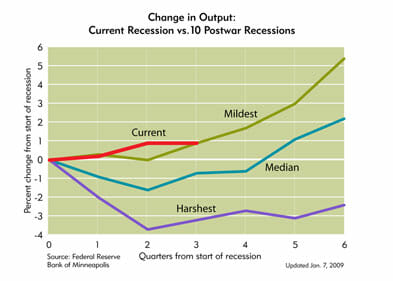 Postscript: To be fair, economists who look at this stuff much more deeply were calling out deep problems long before Paulson screamed fire in a crowded movie house (
