Mommy, Mommy, I'm Scared
Via the environmental blog Thin Green Line:
Check out this post on Bay Area Moms revealing that products with high fructose corn syrup contain mercury. Scary!
I have had some experience working with recreation on lakes that have mercury-contaminated fish (not good for business) so I thought I would check out the articles. Mommy Files blog here. Advocacy group quoted here. Actual study here. Test results here.
This strikes me as being right at the focal point of where both the environmental and consumer protection movements went off the rails -- the issue of relative risks. In short, risks for things with scary names (mercury and radiation being two great examples) cannot seem to be processed rationally. Everything is toxic, at some concentration. The key is understanding concentration and relative risks, and not panicking when anyone yells "mercury" in a crowded grocery store.
Before I get into this more, it is a little hard to discuss because I can't really find in the study or the advocacy press releases what forms the mercury take in the HFCS -- it may be they just don't know yet. The form the mercury is in matters. Most people would be surprised, but while pure liquid mercury is not good for you, but it isn't particularly toxic when compared to other forms (just ask Sir Isaac Newton, who used to drink the stuff). Mercury vapor is really bad, as are certain chemical derivatives of mercury, such as the form often found in fish.
So here is some perspective on mercury concentrations, again remembering these standards often apply to specific chemical variants. The US legal limit on fish is 1 part per million, or 1 ppm. The legal US limit on mercury in water is 2 parts per billion, or 2 ppb. One might think that means the mercury in water is more dangerous, but it is actually in a much less dangerous form (according to my imperfect understanding) than the mercury in fish. However, it is assumed that one drinks more grams of water a day than grams of fish. This does not entirely explain the 500-fold discrepancy -- my guess is that this is also a matter of attention, as drinking water standards and contaminants get much more headline plan than for fish (again, in part due to a general inability, particularly in the media, to sort through relative risks).
So then we have HFCS. The worst test value was apparently in Quaker Oatmeal to Go, which had a value of 350 parts per trillion (ppt). In other words, the worst sample found anywhere had a mercury level nearly 6 times lower than the federal drinking water standard (2 ppb = 2000 ppt). What this means is that you would have to eat 63 pounds of Quaker Oatmeal to Go a day to have the same mercury risk as drinking 5 liters of water at the federal standard each day. And that is the worst product. Only 17 of 55 products tested had any detectable mercury at all, and only 7 had concentrations over 100 ppt.
Don't even get me started on fish. 8 ounces of fish at the federal standard would have the same mercury as 1,429 pounds of Quaker oatmeal. The risks are not even in the same ballpark. The oatmeal risk is three orders of magnitude lower than the fish risk. I wonder how many of the moms who now quiver at giving their kids oatmeal still feed their kids lots of nutritious fish?
The right way to write this story is not "scary!" The right way to write this story is "Hey, we found some mercury where we did not expect it, this bears further study, but right now the concentrations are so far lower than you would find in many other everyday foods you eat or drink that it's not worth worrying about. If you really want to protect your kids from mercury, stay away from fish."
Postscript: I lament the passing of sugar in favor of HFCS. So often food activists gloss over this issue, preferring to imply it is some kind of corporate conspiracy to give us worse food. But in fact, the main blame for this shift lies entirely on Congress, which maintains absurdly high sugar tariffs and a continued blockade of Cuba that give us among the highest sugar prices in the world. Faced with this reality, food manufacturers cleverly found an alternative. I prefer good old sugar, and implore Congress to ditch corporate welfare for sugar manufacturers



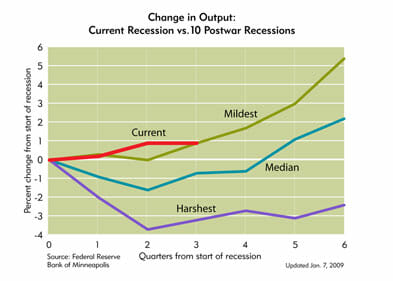 Postscript: To be fair, economists who look at this stuff much more deeply were calling out deep problems long before Paulson screamed fire in a crowded movie house (