Author Archive

Well, I Guess I Called This One

Here is me on November 13

Which gives me the idea that every portrait in a public space of FDR needs to begin by talking about the unconscionable internship of Japanese and every portrait of Wilson needs to start with what an awful racist he was. Time to rename the Wilson school at Princeton!

On November 18, a group of Princeton students occupied the President's office (wow, everything old is new again) and, among their demands was the insistence that the Woodrow Wilson school be renamed because Wilson was a racist.

I have no quibble about calling Wilson a racist.  However, I suggested removing his name mainly because I thought it was one racist the protesters would not challenge.  Wilson was one of the fathers of the Constitutional reinterpretation in the 20th century that allowed the Progressive agenda to go forward at the Federal level, when so much of it wouldn't (and didn't) seem allowable by a straight-forward reading of the Constitution.   Wilson is thus a sort of Godfather to the New Deal and the Great Society and even to Obama's end-runs around the legislature through executive action.

My Wish for the Republican Debates: Less Talk on Taxes, More Talk on Regulation

I would be all for reductions in tax levels, but I don't think that current Federal tax rates are particularly a barrier to growth and prosperity.  A much bigger, and ever-growing barrier to growth is regulation.

5-10 years ago, in my small business, I spent my free time, and most of our organization's training time, on new business initiatives (e.g. growth into new businesses, new out-warding-facing technologies for customers, etc).  Over the last five years, all of my time and the organization's free bandwidth has been spent on regulatory compliance.  Obamacare alone has sucked up endless hours and hassles -- and continues to do so as we work through arcane reporting requirements.  But changing Federal and state OSHA requirements, changing minimum wage and other labor regulations, and numerous changes to state and local legislation have also consumed an inordinate amount of our time.  We spent over a year in trial and error just trying to work out how to comply with California meal break law, with each successive approach we took challenged in some court case, forcing us to start over.  For next year, we are working to figure out how to comply with the 2015 Obama mandate that all of our salaried managers now have to punch a time clock and get paid hourly.

Greg Mankiw points to a nice talk on this topic by Steven Davis.  For years I have been saying that one effect of all this regulation is to essentially increase the minimum viable size of any business, because of the fixed compliance costs.   A corollary to this rising minimum size hypothesis is that the rate of new business formation is likely dropping, since more and more capital is needed just to overcome the compliance costs before one reaches this rising minimum viable size.  The author has a nice chart on this point, which is actually pretty scary.  This is probably the best single chart I have seen to illustrate the rise of the corporate state:

decline of new business employment


Postscript:  I had thought that all the difficult years converting all of our employees from full to part time to avoid Obamacare sanctions would be the end of our compliance hassles (no company will write health insurance for us, so our only defense against the mandates and penalties is to make everyone part-time).  But the hassles have not ended.  For every employee, next year we must provide a statement that has a series of codes, by month, for that employee's health care status.  It is so complicated that knowledgeable people are still arguing about what codes we should be using.  Here is a mere taste of the rules:

  A code must be entered for each calendar month January through December, even if the employee was not a full-time employee for one or more of the calendar months. Enter the code identifying the type of health coverage actually offered by the employer (or on behalf of the employer) to the employee, if any. Do not enter a code for any other type of health coverage the employer is treated as having offered (but the employee was not actually offered coverage). For example, do not enter a code for health coverage the employer is treated as having offered (but did not actually offer) under the dependent coverage transition relief, or non-calendar year transition relief, even if the employee is included in the count of full-time employees offered minimum essential coverage for purposes of Form 1094-C, Part III, column (a). If the employee was not actually offered coverage, enter Code 1H (no offer of coverage) on line 14.  For reporting offers of coverage for 2015, an employer relying on the multiemployer arrangement interim guidance should enter code 1H on line 14 for any month for which the employer enters code 2E on line 16 (indicating that the employer was required to contribute to a multiemployer plan on behalf of the employee for that month and therefore is eligible for multiemployer interim rule relief). For a description of the multiemployer arrangement interim guidance, see Offer of health coverage in the Definitions section. For reporting for 2015, Code 1H may be entered without regard to whether the employee was eligible to enroll or enrolled in coverage under the multiemployer plan. For reporting for 2016 and future years, ALE Members relying on the multiemployer arrangement interim guidance may be required to report offers of coverage made through a multiemployer plan in a different manner.

Here are some of the codes:

  • 1A. Qualifying Offer: Minimum essential coverage providing minimum value offered to full-time employee with employee contribution for self-only coverage equal to or less than 9.5% mainland single federal poverty line and at least minimum essential coverage offered to spouse and dependent(s).

    This code may be used to report for specific months for which a Qualifying Offer was made, even if the employee did not receive a Qualifying Offer for all 12 months of the calendar year. However, an employer may not use the Alternative Furnishing Method for an employee who did not receive a Qualifying Offer for all 12 calendar months (except in cases in which the employer is eligible for and reports using the Alternative Furnishing Method for 2015 Qualifying Offer Method Transition Relief as described in these instructions).

  • 1B. Minimum essential coverage providing minimum value offered to employee only.
  • 1C. Minimum essential coverage providing minimum value offered to employee and at least minimum essential coverage offered to dependent(s) (not spouse).
  • 1D. Minimum essential coverage providing minimum value offered to employee and at least minimum essential coverage offered to spouse (not dependent(s)).
  • 1E. Minimum essential coverage providing minimum value offered to employee and at least minimum essential coverage offered to dependent(s) and spouse.
  • 1F. Minimum essential coverage NOT providing minimum value offered to employee; employee and spouse or dependent(s); or employee, spouse and dependents.
  • 1G. Offer of coverage to employee who was not a full-time employee for any month of the calendar year (which may include one or more months in which the individual was not an employee) and who enrolled in self-insured coverage for one or more months of the calendar year.
  • 1H. No offer of coverage (employee not offered any health coverage or employee offered coverage that is not minimum essential coverage, which may include one or more months in which the individual was not an employee).
  • 1I. Qualifying Offer Transition Relief 2015: Employee (and spouse or dependents) received no offer of coverage; received an offer that is not a qualifying offer; or received a qualifying offer for less than 12 months.

Apparently Beats Headphones are Oppressive and Racist Now

Apparently Beats headphones are now a "symbol of oppression" and wearing them is grounds for being berated and perhaps attacked by protesters.

Now, I always thought Beats were over-priced and over-hyped, and thought they were mainly a marker for people who preferred brand signaling over performance (at the risk of angering some of you, I would put Louis Vuitton bags as the leader of this category of products).

Apparently, making Dr. Dre wealthy(er) from his involvement as a co-founder of the product, and enriching the bank accounts of many other hip hop artists for their endorsements, is now "oppression."  Hmm.  Well, I am happy to do a public service here and take their endorsement checks and thus the burden of this oppression off their shoulders and on to myself.  Who says we libertarians are not public spirited?

So what is next?  I can't see any particular different between Dre's involvement with Beats and Michael Jordan's involvement with Nike -- are Air Jordans the next symbol of oppression?  What am I missing here?

Three Cheers for Cultural Appropriation

Of all the stupidities coming out of modern college Progressivism, perhaps one of the dumbest is the opposition to cultural appropriation.  Progress comes from cultural mixing -- a good way to think of this is to imagine the opposite of "cultural appropriation" which would likely be something like "cultural apartheid".  That doesn't sound good.

Take just one example -- popular music over the last century.  For a variety of reasons (including their outsider status for much of American history), African Americans have been a font of musical innovation unmatched in the entire world.  Jazz, blues, rock, Motown-style pop, funk, disco, and hip hop all owe much or all of their origins and power to American black music.   Go ask even famous white groups like the Beatles and the Rolling Stones and Eric Clapton and Led Zeppelin who their inspirations were, and they will rattle off mostly black names from Howlin Wolf to Chuck Berry to George Clinton.   Seriously, what Renaissance Italians were to painting, American blacks have been to music.

Being of German decent, I am not going to spend my life listening to just Wagner and polka music. Which reminds me of a story -- not to go all Godwin on you, but the Nazis were a great example of that "cultural apartheid" term I made up earlier. They didn't want pure Germanic culture to be tainted by other (they felt inferior) cultural influences. I have seen the Germans interviewed after the war joking that they were sick of "der fledermaus" because it seemed to be the only opera that could get past the Nazi cultural appropriation police and get played in the years just before the war.

I refuse to inflict this on myself.  I am going to appropriate music from African Americans and anywhere else I feel like.

Postscript:  By the way, Black music in America is in some sense a story of the improvement of the fortunes of African Americans.  In the 1950's and 60's, Black blues musicians couldn't reach white audiences, and bands like the Rolling Stones made a fortune because they played blues music but with safely (for the time) white faces.   White performers ended up with most of the financial rewards from black music.   In the 70's-80's, black musicians started to reach white audiences directly, and enjoy some of the financial rewards, but still were mainly controlled by white producers and record labels.  Today, innovative black musicians (often from the rap / hi hop world) are not just performers but have staked out powerful positions in the industry itself.

Finally, Libertarians and Progressives Uniting to Take On a Critical Issue

The Oxford Comma.

To answer Drum's question, I think the problem may be the name.  "Oxford comma" sounds stuffy and pretentious and 19th century.  Maybe we can call it the Kardashian comma or something.

If Blacks on Campus are Mad about Institutional Racism, why aren't Asians exploding in anger?

So if Yale and Amherst are institutionally racist despite giving African-Americans (on average) a 100+ point break on SAT requirements for entry, why aren't Asian Americans exploding given they start in a 100+ point hole?  And can anyone imagine a college president turning around from her trip to London (as did Biddy Martin of Amherst) to talk to a group of aggrieved Asian students?  I would contend that Asian Americans get stereotyped and discriminated against in far more meaningful ways on major college campuses than do Blacks and Hispanics.

Bonus:  watch Asian student get crushed by "tolerant" and "diversity-minded" protesters at Claremont McKenna.

Using "diversity" to justify totalitarianism, and "tolerance" to justify speech restrictions.

First they came for the college presidents, and I did not speak out— Because I was not a college president

I have seen Conservatives arguing that we should just sit back and laugh at what is going on at college campuses, as Progressive college faculty reap what they have sown.  I disagree.

Thoughts from an Amherst College Parent

I am on the road and really don't have much time to write, but I feel compelled to give a few thoughts on the whole Amherst College situation that has blown up in social media over the last 24 hours.

Yesterday (Thursday) my son called me to tell me about a sit-in he found himself a part of in the library (I must admit to being vaguely happy he was actually in the library). He is not like me, and tends to observe these kinds of thing with an amazing dispassion.  He is fascinated by people with extreme views and loves to observe them.  For example, he always enjoys stopping and listening to the religious zealots preaching outside of Comicon when we visit.  It is almost an anthropological approach.

So I will say up front that most of the views here are mine, not his, since he reported most of the events as merely something interesting that happened to him.  I also say this because I don't want anyone on campus getting the idea they need to start some sort of totalitarian campaign against him, a fear that you will see is well-justified below.

His main observation of the original sit-in was that people seemed to have enormously negative experiences as persons of color on campus and he found that surprising.  He reported that people talked about their life at Amherst as, say, a black female, being a living hell, one that my son found hard to jibe with the general intolerance in the classroom for even an ambiguously racist comment.

I certainly understand that people of color still face a headwind of at least minor racist B*llshit.   I am reminded of one Amherst student telling me about having guests at a southern country club function trying to order drinks from him because he was black.

But when I grew up in the 60's in Texas racism meant that kids I knew actually went out gay-bashing in Montrose (the traditionally gay district in Houston) and the new black kid in an all-white school got beaten up every day (I will confess I had mixed fealings about both of these, since I was otherwise the bullying target of choice in the class and sometimes appreciated the split focus).  Against this backdrop, it is hard for me to consider a school that gives black applicants a substantial break on SAT scores for entrance and whose President turned around from a trip to London to address concerns of ethnic minorities to be institutionally racist.

Besides, it seems like kind of an insult to your parents and grandparents to call an Anglo wearing a sombrero to a party "violence" when those previous generations faced the real thing.  It's a bit like telling your granddad who lived through the Bataan death march that the University starved you by letting you out of class 30 minutes late for lunch.

One thing my son reported was that there were a lot of threats made against white students who somehow were not present in the library at the sit-in, as if non-presence at an unannounced event was somehow in and of itself racist.   The general tone of the discussion was very authoritarian -- everyone should be forced to be here, everyone should be forced to take diversity courses, etc.

The other thing that came out of the meeting was substantial vitriol aimed at a sign that appeared in a dorm window.  The media has not really been very specific about the sign, but it read "Free Speech 1776-2015".  All things being considered, this was a pretty tame commentary, especially since the protesters themselves kept talking about the concepts of free speech being dated.  But none-the-less, the student who posted it was being treated like the second coming of Adolf Hitler.

So today, some of the students confronted the school President Biddy Martin (who had turned around from a trip to London to meet them) and basically served her with an ultimatum, demanding that on the spot she sign a list of demands listed here.  The demands are alternately non-nonsensical and and totalitarian.  A few highlights:

  • The document essentially demands that Ms. Martin and the Board of Trustees apologize for all manner of past sins that have nothing to do with their own actions, or those of the College, or even those of the alumni of the College.

"President Martin must issue a statement of apology to students, alumni and former students, faculty, administration and staff who have been victims of several injustices including but not limited to our institutional legacy of white supremacy, colonialism, anti-black racism, anti-Latinx racism, anti-Native American racism, anti-Native/ indigenous racism, anti-Asian racism, anti-Middle Eastern racism, heterosexism, cis-sexism, xenophobia, anti-Semitism, ableism, mental health stigma, and classism."

This is a sort of secular original sin, and is common among these SJW movement.  The error of racism is that it puts on people an original sin based on the circumstances of their birth which they cannot erase through any sort of good behavior.  This movement shares the same error, putting on whites and straights and rich people and males and the Amherst community and a variety of other groups the same sort of original sin.

I will add one irony, that Ms. Martin is probably a lot closer in her beliefs to the protesters than I am.  I do not know her politics, but it is impossible to imagine she would be made President of Amherst College without being vetted in advance as reliably Liberal/Progressive.  This is not Left vs. Right, but Robespierre turning on his fellow revolutionaries.

  • I find this bit scary:  "Amherst College Police Department must issue a statement of protection and defense from any form of violence, threats, or retaliation of any kind resulting from this movement."  I will bet you a million dollars that a) you are thinking this means physical violence or disciplinary action but b) the authors mean "retaliation" to include verbal criticism of any sort, such that this very article would be considered "retaliation".
  • "President Martin must issue a statement of apology to faculty, staff and administrators of color as well as their allies, neither of whom were provided a safe space for them to thrive while at Amherst College."  I am willing to believe Amherst is not perfect and that there are *ssholes that make life difficult at times for people of color there, but it would be hard to find another place on the entire planet that is a safer and more welcoming environment for ethnic minorities that Amherst College.  What are they going to do in the real world?
  • This paragraph has gotten a lot of attention, as it should:

5.    President Martin must issue a statement to the Amherst College community at large that states we do not tolerate the actions of student(s) who posted the “All Lives Matter” posters, and the â€œFree Speech” posters that stated that “in memoriam of the true victim of the Missouri Protests: Free Speech.” Also let the student body know that it was racially insensitive to the students of color on our college campus and beyond who are victim to racial harassment and death threats; alert them that Student Affairs may require them to go through the Disciplinary Process if a formal complaint is filed, and that they will be required to attend extensive training for racial and cultural competency.

The author of the fee speech poster needs to be punished because, why?  Because he or she was obviously dead-on correct in their analysis of the movement's goals?  Essentially they are saying, "yes you are right, we want to destroy free speech but you are not allowed to tell people that is what we are doing."

  • I have no problem with ditching "Lord Jeffs" as a mascot. First, it is a terrible mascot name.  Second, while ironically Amherst would have been considered a pretty enlightened and tolerant master by the colonists of the time, he did suggest the whole TB blankets to the Native Americans thing and since that is the only story anyone knows any more about him, its really a bad association.  I suggest "Redskins" instead  (OK, just kidding.  I am not a Redskin name supporter.)  The "moose"  (Meese?) suggestion is awful.  I would support a Dartmouth style solution of calling them the "Purple" before I could climb on board with "moose".  Or maybe in the spirit of the times they can be the "mauve".As an aside, Amherst College has a nice little art museum (which owes most of its existance to Standard Oil money, which I am sure the faculty and students try to ignore).  There is a really interesting portrait of Lindberg there I have never seen before.   Anyway, all the pictures have a short descriptor about the work as one would expect.  EXCEPT the one for the painting of Lord Amherst himself, which has a descriptor about 20 inches long because about 18 inches have been tacked on up front making sure everyone understands what a horrible idea the TB blankets were.  It reminds me of the Enola Gay in the Smithsonian, which I am told is still without any kind of label or plaque because no one could agree on how much vitriol needed to be spilled in the description about how bad dropping atomic bombs on civilians is.  Which gives me the idea that every portrait in a public space of FDR needs to begin by talking about the unconscionable internship of Japanese and every portrait of Wilson needs to start with what an awful racist he was. Time to rename the Wilson school at Princeton!

A Modest Proposal for Fixing NFL Thursday Night Games -- Take Advantage of the Bye Week

NFL coaches hate Thursday night games, because their players have essentially only half the preparation and recovery time as they do on a normal Sunday game schedule.

So here is my (partial) solution.  Where possible, teams playing Thursday night should have their bye week the previous weekend.  For teams with the bye week the previous week, a Thursday night game is no issue -- in fact, it might even be a benefit, breaking up a single long-preparation period between games into two longer-than-average periods.

This is probably only a partial solution.  Only 8 weeks have bye weeks, and since for week 1 the Thursday game is no issue, this only solves the Thursday problem on 9 of the 17 regular season weeks.  I suppose we could extend by weeks to more weeks of the season, but even as they exist today a partial solution is better than none at all, right?

A Modest Proposal to Improve Elections - CBO Scoring Resources for Candidates

At some point in the election, based on some criteria I do not understand, a Presidential candidate crosses some threshold of seriousness and they are given Secret Service protection.

I have a similar idea.  At some point in the election, candidates should have the ability to have a certain number of their proposals (spending, regulatory, tax plans) scored by the CBO, just as legislation is scored.  Use of such services would not be mandatory, but I would assume that there would be a certain pressure to get one's own plan scored if one's opponent is waving around a scored plan.

CBO scoring has all sorts of problems, not least of which is the common trick of spending like crazy for 9 years and then inserting some huge imaginary savings in year 10 that makes the whole thing score as budget neutral.  But folks will be able to see that (if they want to) and I think the advantage of being able to see actual costs and revenues of candidate plans in the same way they would be viewed as legislation  (which presumably is the goal of candidate proposals, to turn them into real legislation) would outweigh these shortcomings.

An Obamacare Alternative

After criticizing Obamacare at a party, another person said something like "well you can't criticize it without suggesting an alternative."  This of course is total bullsh*t.  The passage of a bad law to imperfectly achieve objectives with which I disagree does not obligate me to craft alternative legislation to achieve those objectives.

But I decided to take a swing at it anyway.  Taking a step back, I said that I thought there were two overriding problems in health care that the government might address.

The first is a problem largely of the government's own creation, that incentives (non-tax-ability of health care benefits) and programs (e.g. Medicare) have been created for first dollar third-party payment of medical expenses.  This growth of third-party payment has eliminated the incentives for consumers to shop and make tradeoffs for health care purchases, the very activities that impose price and quality discipline on most other markets.

The second problem that likely dominates everyone's fears is getting a bankrupting medical expense whose costs are multiples of one's income, and having that care be either uninsured or leading to cancellation of one's insurance or future years.

So my suggestion I made up on the spot (and I am a little fuzzy on the details as my friend had actually cracked open a bottle of Van Winkle bourbon for a few of us, my first taste of that magic elixir) was to scrap whatever we are doing now and have the government pay all medical expenses over 10% of one's income.  Anything under that was the individual's responsibility, though some sort of tax-advantaged health savings account would be a logical adjunct program.

I obviously make policy better when I am drinking absurdly rare and expensive bourbons, because Megan McArdle (who knows a hell of a lot more than I about health care economics) has apparently been advocating something similar for quite a while

How would a similar program work for health care? The government would pick up 100 percent of the tab for health care over a certain percentage of adjusted gross income—the number would have to be negotiated through the political process, but I have suggested between 15 and 20 percent. There could be special treatment for people living at or near the poverty line, and for people who have medical bills that exceed the set percentage of their income for five years in a row, so that the poor and people with chronic illness are not disadvantaged by the system.

In exchange, we would get rid of the tax deduction for employer-sponsored health insurance, and all the other government health insurance programs, with the exception of the military’s system, which for obvious reasons does need to be run by the government. People would be free to insure the gap if they wanted, and such insurance would be relatively cheap, because the insurers would see their losses strictly limited. Or people could choose to save money in a tax-deductible health savings account to cover the eventual likelihood of a serious medical problem.

The missing piece here, as was in my plan, is I have no idea how much this would cost.

The Other Lesson from the University of Missouri

For years college presidents cut a Faustian bargain with their football programs.  The University would shield athletes from having to take any actual classes and shower the program with money meant for academics in return for the football program raising the visibility and prestige of the university and at least nominally pretending that academics come first.  For years Presidents consoled themselves that they still held the whip hand in the relationship, even when it was increasingly clear they did not (e.g. at Penn State).  This week, it was proved for all the world  who is in charge.  University Presidents can keep their jobs only so long as the football players are kept happy.

Freaking Awesome Development in Pennsylvania

.  This is great.

A Keystone Hack

Well, we have reached another milestone in our permission-based economy with the Administration's rejection of the Keystone Pipeline.  We have zillions of miles of pipelines and are actually wasting energy and creating environmental messes moving the same oil by the inferior option of rail, but somehow this one pipeline had to be opposed.

Actually, the only reason this project is in front of the administration at all is because it crosses the Canadian border, which requires  State Department sign-off.  Which leads me to wonder if there is a hack.  Why not take the pipeline right up to the border from both sides and create a rail line across the border using a continuous loop of tank cars.  Its kludgy and inefficient, but probably less so than moving the oil long distance by rail.

I am reminded of this from a story long ago off Santa Barbara.  Exxon had gotten permission to drill in Federal waters, but local state/county folks wanted to find a way to stop the oil development.  Plans were (as is typical for any offshore oil) for a separation facility on shore that would separate oil, gas, and water from the mix that usually comes up out of the ground.    The state or local folks (can't remember which) refused to permit the separation facility, thinking that would kill the project.  But Exxon built what I believe was a unique separation facility on a boat and anchored the boat offshore.  No land permits necessary.

This is very similar, in my mind, to the pipeline decision.  California's attempt to block oil development altogether proved futile, just as Obama's decision will have little effect on long-term Canadian oil development.  But it did, in both cases, force a workaround (rail and the separator ship) that were almost certainly environmentally worse solutions than those that were halted.

Gift Idea for Readers

T-shirts with the entire text of great books printed on them.  Here is the one for Kafka's The Metamorphosis.  My son wanted a George Orwell one but there are none available as of yet.  Most seem to be books old enough to be in the public domain, which is likely no accident, though there are a few newer books.

morph-tee-6_1024x1024

Yale Literally Has Its Choice of Any High School Senior in the County. And It Picked These Folks?

Via Reason, but the story is all over

After giving Holloway his comeuppance, they moved on to Nicholas Christakis, master of Silliman College. What was Christakis’s crime? His wife, an early childhood educator, had responded to a campus-wide email about offensive Halloween costumes by opining that it was inappropriate for the college to tell students how to dress. According to The Washington Post:

“Whose business is it to control the forms of costumes of young people? It’s not mine, I know that,” wrote Erika Christakis, an early childhood educator and the wife of Nicholas Christakis, the Silliman College master. Both later took to social media to defend the e-mail, incensing students by tying it to debates about free speech and trigger warnings. At a Wednesday night forum hosted by the Afro-American Cultural Center, Erika Christakis sought to leave the meeting during a discussion of her e-mail, further provoking student anger. …

Students grew distressed, with one shouting at Nicholas Christakis to be quiet and questioning why he took the position at the university. “You are a poor steward of this community,” the student said. “You should not sleep at night.”

I guess the question is whether colleges like Yale are preferentially choosing students with this authoritarian mindset, or whether they are training them to be authoritarian.  In either case, they seem to be reaping what they sowed.

This story reminds me of two past observations I have made about universities.  The first is that their diversity programs, despite Universities being intellectual institutions, focus on absolutely everything (from skin pigmentation to reproductive plumbing) except diversity of ideas.  Perhaps this is because the only way to achieve "safe space" as defined by these students is either to create an intellectual mono-culture (the opposite of diversity) or to suppress speech and idea sharing so much that no intellectual discourse happens at all.  Definitely your classic "reap what you sow" situation.

The second observation is that I once thought that a key goal of "diversity" was to eliminate the in-group/ out-group dynamic that has been so destructive through all of history.  But I am increasingly convinced that the true objective of diversity programs as practiced on university campuses is to simply shift the "out-group" tag from one set of people to another.  More horrible things are said on campus about whites, males, Asians, wealthy people, straights, frats, etc than I ever heard in my entire lifetime from anyone about, say, African Americans.

Just look at how most Ivy League schools treat Asians.  The discrimination that occurs against Asian students is amazing, with Asians having to produce SAT scores hundreds of points higher than any other group to have an equal chance of admission.  This is why, despite all my support over the years for my alma mater, I quit doing college interviews for Princeton -- I got tired of being a part of hosing all the hard-working Asian kids I was interviewing.

Chip Card Transition, And Life as A Small Business Owner

Well, per the new rules, we replaced all of our old credit card readers (dozens) with new ones that can take chip cards (EMV).  Here is the bone pile of all the old technology, many of which were bought less than 2 years ago:

CameraZOOM-20151104114553578

This illustrates both the best and worst of running one's own company.

The bad:  As CEO, I am actually futzing with distributing credit card terminals to the field and collecting the used ones to be recycled.

The good:  I have total control.  I was just in Washington DC, and in one meeting the National Park Service was there talking about some multi-year, multi-million dollar study to figure out their electronic payments "strategy" at their parks.  My payments strategy discussion went literally something like this:

Merchant guy:  Do you want to pay an extra $100 for the terminals to accept NFC payments (e.g. Apply pay, Android pay).

Me: Um, sure seems like the future.  Does it cost more to clear a transaction that way?

Merchant guy: no

Me:  They yes, I'll take it.

Now, we can take smart phone payments at dozens of public parks my company operates, all decided and implemented in about 30 days.

By the way, I am amazed at how many large companies like CVS appear to have the chip card readers but the store clerk tells me that they are not turned on yet whenever I try to stick my card in that slot (for those of you who don't know, the chip side goes head into a slot like an ATM slot on the front).  October 1 was the date that there was a liability shift, where merchants bear more liability for fraud if they don't take the chipcards.  Not sure how I was able to get this done in my little company but they can't manage it.

I was told by one person at CVS, a store manager but they may be off base, that they don't take the chip cards yet because they take longer than swiping.  This seems dumb.  First, many retailers for swipe cards waste time asking for the last four digits of your card, which is not necessary with the chip cards.  Further, CVS wastes a TON of time at the register with their stupid loyalty program.  Yes, I know it is a pet peeve of mine I rant on from time to time, but I have spent a lot of time waiting for people in front of me to try different phone numbers to see which one their account is under, or to waste time signing up for a loyalty card with 6 people in line behind them.  Makes me crazy.  If they can waste 30 seconds each transaction on stupid loyalty cards they can wait three extra seconds for a more secure credit card transaction.

Postscript:  It really should have been chip and pin rather than chip and signature

PS2:  Never, ever lease a credit card machine.  You pay about 4x its retail price, even present value.  I got roped into doing this for a few machines on the logic that this equipment transition was coming, and they would switch out my equipment.  But then they sold their leasing portfolio and the new owner wouldn't honor this promise, so I ended up overpaying for the old terminal (and having to pay $1000 each just to get out of the lease) and then buying the new terminals.  Live and learn.

Three Reasons It May Be Time To Short Automobile Stocks

As always, take this with a grain of salt given my past history of investment advice.  I am frequently correct on my calls to short something, but tend to be really early, such that a person (ie me) can likely be short-squeezed into oblivion before the fall takes place.

That being said, I think autos would be a good short.  Why?

  1. They are riding positive sentiment, based on a strong October.  But October was strong because it had 5 weekends rather than 4 and recent results reflect a lot of channel stuffing.   Shorting means finding the top, and this feels like the top
  2. I would be stunned if the Volkswagen emissions cheating is limited to Volkswagen.  Volkswagen is not unique -- Cat and I think Cummins were busted a while back for the same thing.  US automakers don't have a lot of exposure to diesels (except for pickup trucks) but my guess is that something similar was ubiquitous.  **
  3. Apparently, the recent rebound in auto sales has been driven by a huge spurt of sub-prime lending that looks remarkably similar to the housing market 7 years ago:

This comes against a backdrop of rising US auto sales (see the numbers for October, out earlier today) and it's not difficult to explain the gains. Just take a look at the following data from Experian on the lunatic loan terms being extended to borrowers (from Q1):

  • Average loan term for new cars is now 67 months — a record.
  • Average loan term for used cars is now 62 months — a record.
  • Loans with terms from 74 to 84 months made up 30%  of all new vehicle financing — a record.
  • Loans with terms from 74 to 84 months made up 16% of all used vehicle financing — a record.
  • The average amount financed for a new vehicle was $28,711 — a record.
  • The average payment for new vehicles was $488 — a record.
  • The percentage of all new vehicles financed accounted for by leases was 31.46% — a record.

** Postscript:  The biggest problem with the emission cheating is that it caused the world to under-estimate the cost of emissions mandates.  When performance of cars starts to drop noticeably when emissions cheating is fixed, it will be an eye-opener

Flattery is Death for an Organization

The WSJ wrote the other day about Hillary Clinton's emails:

A common thread running through the tens of thousands of emails that landed in Hillary Clinton’s in-box in her time as secretary of state is that aides and assorted advisers believe she is, well, awesome.

With a few exclamation points tacked on.

In notes sent to the private email account Mrs. Clinton used, various advisers routinely heap praise on the person who gave them their jobs or elevated them to her inner circle. Email flattery of this sort is a common tactic in the everyday workplace, but the Clinton emails show how it comes into play at the highest levels of government.

Employees tell Mrs. Clinton she is doing a “spectacular job,” that she has many admirers and that her remarks were “pitch perfect.” They assure her she looks “gorgeous” in photos and commend her clothing choices.

Look, I guess everyone has their own leadership style but from my experience it is a terrible idea to promote this kind of thing in one's organization.

Why?  Well, my organization has 350 people in it.  We can either think with just one person (me), working to improve our operations, or we can think with 350.  Those 349 other people know many of the ways in which we are screwing up and can improve -- the problem is getting them to come forward with those ideas.  And getting them to do so is far less likely if we are maintaining some sort of North Korean style personality cult of the CEO.

I have written about this before, but it's why I consider my Ivy League degrees to be a negative in running the company.  Many of my employees have only a high school education (at best) and are intimidated in bringing up an idea or telling me I am screwing up because they assume since I have these Ivy League degrees I must be smarter than they are and know what I am doing.   But in their particular job, in terms of my knowledge of what they see every day from customers and operationally, I am dumb as a post and completely ignorant.

Anyone who has worked for me for more than a few months can likely quote my favorite line which I use in most of my employee talks -- "If you see something that seems screwed up, don't assume Warren is smarter than you and wants it that way, assume that Warren is screwing up and needs to be told."

Postscript:  This sort of flattery also makes me deeply uncomfortable on a personal level, so much so I have a hard time understanding people who revel in it.  I once had an employee that could not stop with this sort of personal flattery, and eventually we ended up terminating them.  We terminated them for other good reasons, but I must admit to being relieved when they left.

Quote of the Day -- On Intellect in Politics

From Chris Dillow via Arnold Kling:

I would rather have second-rate politicians who know they are duffers than ones who believe they are brilliant.

I am sympathetic with this statement but for a reason that Dillow does not mention.  No one is smart enough to try to manage certain complex systems, like the economy.  They don't have the information or the ability to set prices, fix (or even correctly identify) "market failures, assess the preferences of 300 million individuals, or any of the other things politicians try to do -- no matter how freaking brilliant they are.   Really smart people in politics (or people who think they are really smart) also have a tendency to want to substitute, by force, their judgement and decision-making for my own.

Victory Against Speech Suppressing Libel Suits

As someone currently being sued for libel by a deep-pocketed corporation who wants me to take down a product review they don't like, I am happy to see Mother Jones prevail in their libel case brought by Frank VanderSloot, a case pretty transparently brought to suppress speech Mr. VanderSloot didn't like.  The bad news is that Mother Jones ended up with a bunch of legal bills for which they cannot get reimbursed (the exact same situation I am likely to face when I inevitably win my case).

This is exactly why we need better state and Federal anti-SLAPP laws, though I have found from personal experience campaigning for them here in Arizona that it is easy to run up against bipartisan opposition.  I will say that as happy as I am about Mother Jones' victory, there is a teenie tiny bit of schadenfreude seeing them lament the lack of loser-pay rules, something they would oppose in most any other case but their own.

Coyote Goes to the Big City, Views Some Art

I am in DC to testify tomorrow on the renewal of some recreation legislation that is currently before the House National Resources Committee.  With some time on my hands this afternoon, I walked around the Mall.

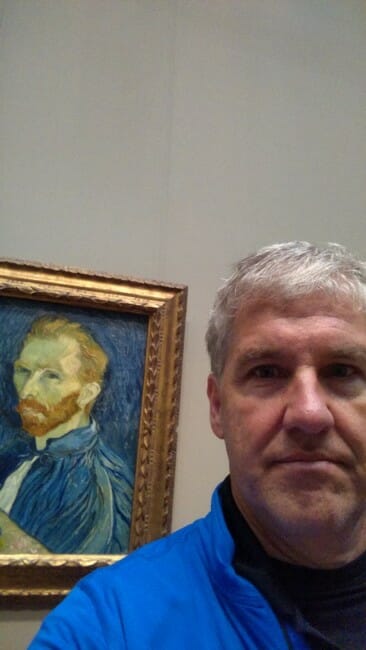
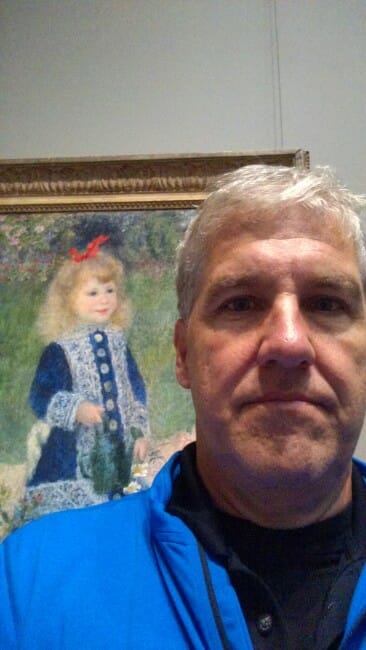
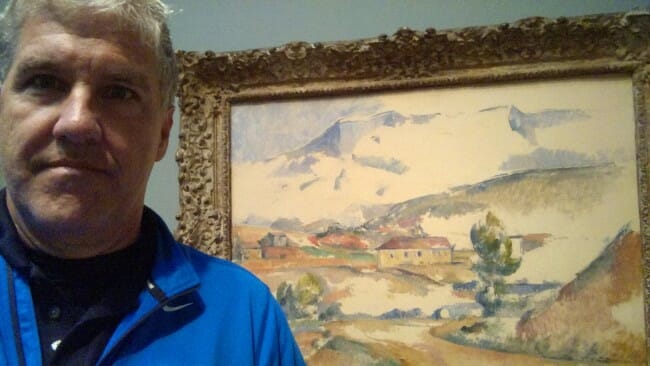
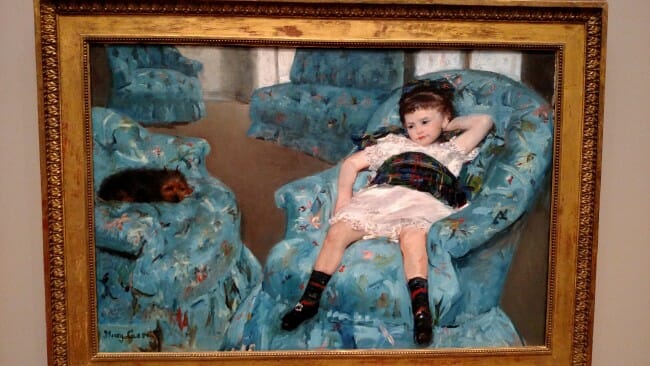
I found myself in some art place called Nat Anal's Art Gallery.  My first impression was that this guy was probably going bankrupt, since he seemed to have way too much space on some really expensive real estate.  This impression was only confirmed when I looked at some of the artists he was repping.

Take this guy for example.  What the hell?  Does this guy even know what a reasonable range of skin colors is?  Is this supposed to be a red-headed Vulcan?  I don't think this guy has much of a future in painting.

IMG_20151027_123853259

And look at this next one.  The girl's face is blurry.  I can understand how you might take a picture out of focus, but how do you paint out of focus?  These guys are going nowhere.

IMG_20151027_124137536

This one is just insulting.  The artist didn't even bother to finish it.  What, did the rent just come due and he had to run the picture down to the gallery half-finished just to get a bit of cash?

IMG_20151027_124437971

He couldn't get a better model?  Pay a few bucks more and get a freaking model with decent posture.  And just because a big rat comes and sits down in your studio you do not have to paint it into the picture.

IMG_20151027_124736137

This gallery is so cheap it's cranking out copies of the same art.  What, did they get a big order for a 100-room motel 6?

IMG_20151027_125206760

This is actually pretty good, but good god is this guy, whoever he is, full of himself.  Let's make a note never to put that guy in charge of anything.


IMG_20151027_124959041

Postscript:  I actually ran inside to get outside of a brief rain shower and to see this painting, among a couple of others.  I am a big fan of Pissarro, particularly his city scenes.

IMG_20151027_124647630

The Napoleon on horseback that was in Vienna was way more spectacular than the studio pose.  I still need to do my European trip roundup and will do it soon, now that I finally got the upload size limit on my server fixed.


My Wife Loves Me

Bought me this bad boy at Costco.

click to enlarge

Flashback: My Favorite Past Pumpkin Effort

Pumpkin1   Pumpkin2

I traced a world map on the pumpkin, and then thinned the pumpkin skin in the land masses without cutting all the way through.  Since there are no holes, you will need an electric light to illuminate it.

Bob Ross Marathon

I am watching a Bob Ross painting marathon on Twitch.  I find his work totally addictive to watch.  He'll do something that looks like a hot mess from a 3-year-old's painting and then suddenly do one other thing and it looks like a detailed forest.  He uses a palette knife and a three inch brush and suddenly he has a landscape painting.  He's my hero.

PS - the chat window is amazing -- somehow people are posting like 20 comments a second on Bob Ross.  I love the Internet.  And where do you get the Bob Ross emoji's?

PPS -- here is the chat window - people posting "ruined" and then about 10 seconds later typing "fixed"