Once You See Communism From the Inside, It's Often Too Late to Get Out
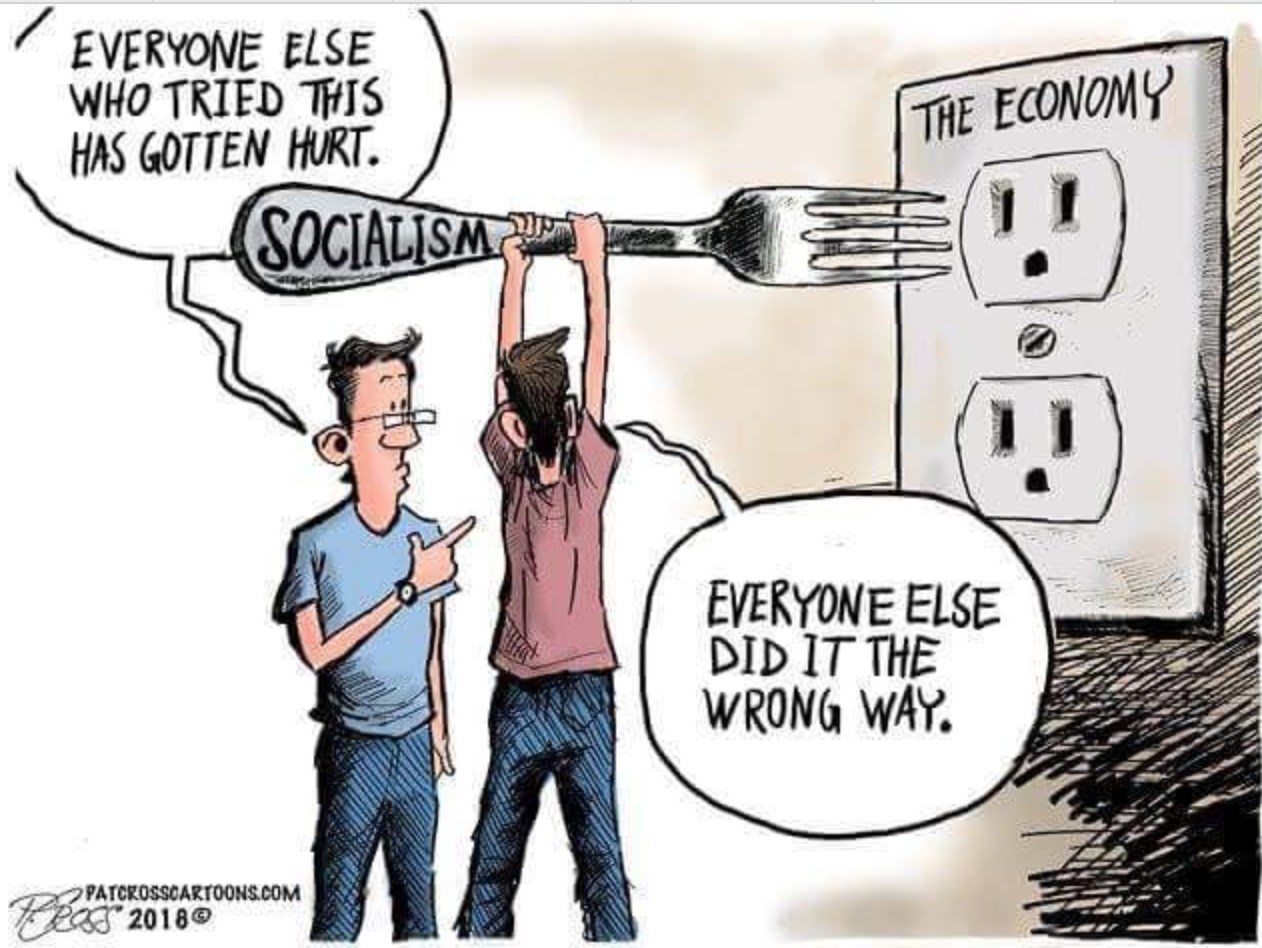
There is generally no good way to run large scale A/B political experiments. Which is why, at least until the current college generation, we all thought the study of history was so important. What happens when we slam on high new tariffs? There is a lot of theory, but we don't have to entirely rely on theory because we have hundreds of years of adding and subtracting tariffs that we can study. In the same way, we can discuss in theory why socialism does not work (incentives, knowledge limitations on central planning, the free rider problem, the incentives for fraud and abuses, etc) -- but we don't have to trust that. We can look at history and see what happened when Communism or hard-core socialism was tried in the Soviet Union, Maoist China, Vietnam, Cambodia, Venezuela, Eastern Europe, Argentina, and most of the countries in Africa at one time or another.
Incredibly the historical experience is absolutely clear -- communism leads to poverty and loss of individual liberty. Every time. It's like 0 for 65. It's failure is the greatest betting lock in the world.
But here we go again in NYC, the home of all the people who consider themselves more sophisticated than you and I, with yet another love affair with communism. The blindness on display is really disheartening. Polls show that a number of groups including Blacks and young people have a very positive view of socialism. It would be fascinating to get a few in a room for a focus group to see how they even understand that term, or how much they know about socialism over history. And don't even get me started on the "Queers for Gaza" crowd -- these are people with $60,000 a year educations who know absolutely nothing.
Today on social media I saw a lot of posts from NYC folks telling the world happily they were proudly voting for Mamdani. So much so someone was circulating a picture of two women celebrating Khomeini's revolution in Iran who ended up respectively killed and exiled [I cannot vouch for the authenticity]. There certainly were many celebrating in those early days of the Iranian Revolution. Unfortunately, as it turned out, as bad as the Shah may have been he was also the single greatest friend of women of the time in the Middle East (which had a lot to do with why the Islamic groups hated him) and his flawed but fairly western nation would be replaced by the gender apartheid they have today. Today there are folks on the Left who seem ready to uncritically support any revolution as long as it gets rid of Trump, a flawed man but also one who is miles short of the Shah (or Hitler of course, or Syngman Rhee).
Somehow, people cannot put this all together from numerous historical examples, but have to find out for themselves by dragging all of us yet again into the abyss. I am pretty sure if you went in a year later you would find a lot of people devastated by the transition and their participation in it, but by then of course it is too late -- these folks have no voices any more.
Eventually people and nations sometime emerge and re-enter the free world. Eastern Europe did in the early 1990s. The Vietnamese people eventually became exhausted with the worst excesses of communism and have opened up some, as have China and Russia. But in many of these cases two generations had passed, or in the case of Russia even more. Folks who emerged from Communism and finally had a voice were not hesitant to describe the horrors.
Back in the 1960s and 1970s, it became fashionable among American academics (who else?) to downplay the problems with communism in general and with Stalin and the Soviet Union in specific. A consensus of sort had developed in these academic circles that the Soviet Union was not that bad. This consensus was at least temporarily blown apart after 1989, when intellectuals of the newly freed Eastern European states joined the academic conversation and made it very clear just how bad things were on any number of dimensions.
But there is actually one historical exception where a nation whose people originally ranged from communism-curious to overtly communist actually experienced hard core totalitarian communism for 3-4 months, and then were freed -- South Korea in the second half of 1950. What we call the Korean War started when Kim Il-Sung's totalitarian communist regime in North Korea invaded South Korea in mid-1950. The initial assault was wildly successful, and eventually the US-backed (technically UN-backed but let's be real) South Korean army was clobbered, giving up the capital Seoul in days and retreated until they were holding just a tiny sliver of the country. Late in the year a US amphibious invasion at Inchon caught the North Koreans totally by surprise and quickly liberated the South (though the war would go on for much longer due mostly to McArthur's antics.
Many South Koreans initially welcomed, even celebrated, the North Korean invasion. The US in its 1945-1950 occupation had been even more ham-handed than usual in Korea, and blew up many formative democratic institutions out of fear that they were somehow communist puppets (and employed a lot of really bad Koreans who had collaborated with and tortured for the Japanese). Koreans were tired of their leader Syngman Rhee, a strong man and US puppet in the mold of the Iranian Shah, who abused, imprisoned, and even killed opponents. In a move that will surprise few today, the teachers and professors of Seoul almost 100% enthusiastically welcomed the North Koreans and pledged loyalty to their cause.
But as in Iran after the Shah, people looking for change were not very careful in evaluating exactly what that "change" was going to be. Very quickly Kim Il-Sung and his forces initiated efforts that would be very familiar later in Maoist China or the Khmer Rouge's Cambodia -- struggle sessions and endless interrogations where enormous classes of people were outright executed for the crime of, say, having a father who was a landholder. Soon, even passionate folks on the South Korean Left started to see that the communists were far worse than what they had before.
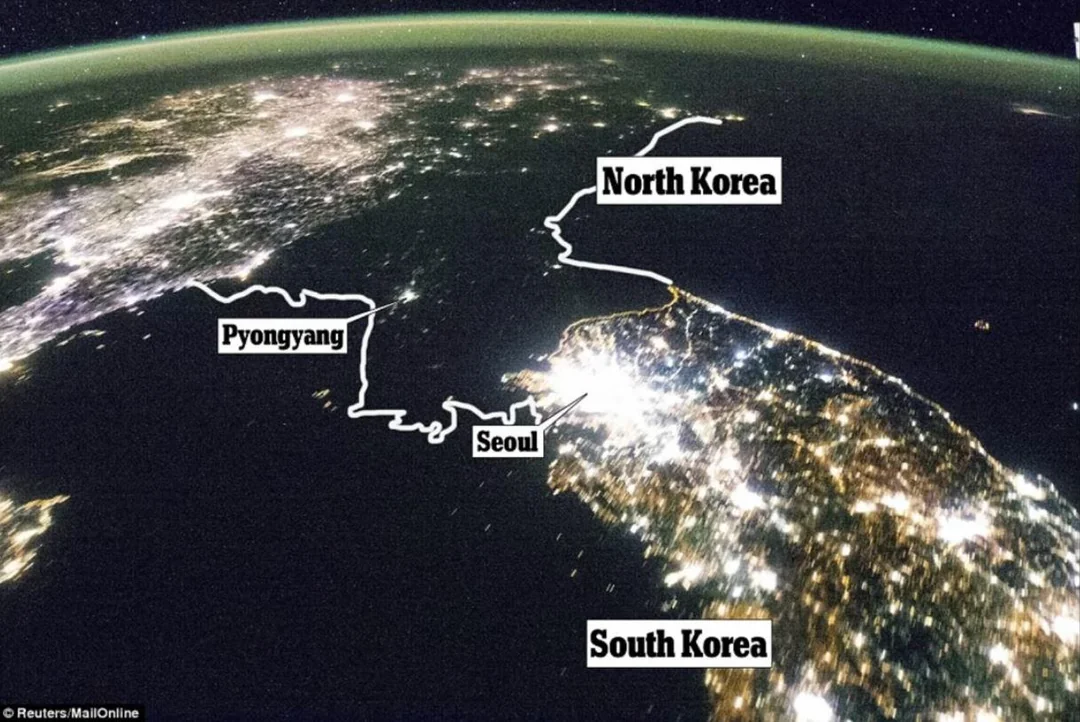
And then, unlike Russia, China, Cambodia, Vietnam, Eastern Europe, etc -- the people of South Korea were liberated after four or five months. The survivors of this period thus had a unique perspective that few in the free world would possess -- they survived a brief sample of communism from the inside. The result was complicated -- a country that became a bastion of anti-communism for decades but also was probably all too accepting of dictatorial leaders who would promise to be strongly anti-communist. I will summarize it this way -- I am not an expert on Korea but both the books I have read on this period came to the same conclusion -- it is impossible to overstate the importance of this five month period on the subsequent history and outlook of the South Korean people. Today, the two Koreas offer perhaps the best A/B test ever for communism vs (sort of) capitalism.
Fortunately, New Yorkers can still move to Florida. Though this is by no means guaranteed. California on several occasions has proposed a steep exit tax on the assets of rich people trying to escape the state.
Postscript #1: A small bit of historical irony: Many progressives see abortion availability as the single most important litmus test of a free society. Ask them why they don't vote for a more reasonable candidate of the other party, they are likely going to say "because Republicans all enslave women by banning abortion." While I hold a pretty centrist position on abortion (legal and easy at conception+1 day, highly restricted at birth-1 day), this litmus test is pretty ironic as you could not get a car or a TV or enough food but the one thing you could get in the Soviet Union was an abortion -- in fact the Soviet Union may have had the highest abortion rate in history, driven by the miserable conditions their citizens lived in.
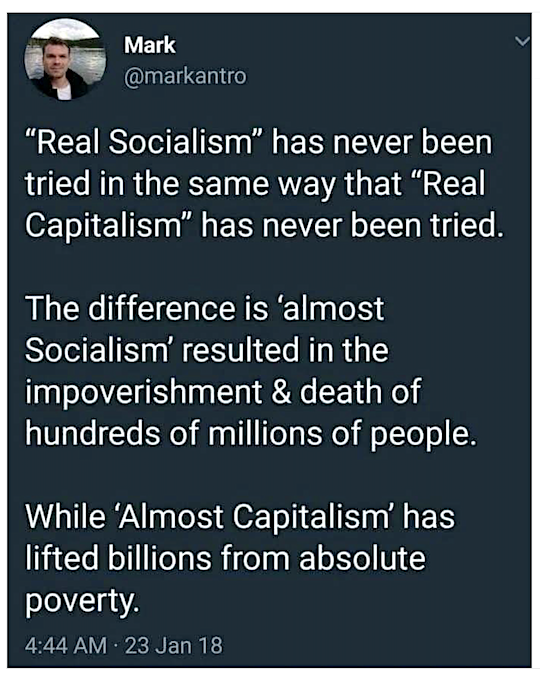
Postscript #2: I could paste in about 200 memes here but here are some of the most relevant: